
How abandoned cart discounts work and what limits apply

Advertisement
Abandoned cart discounts are automated price reductions that retailers email to shoppers who place merchandise into an online basket and leave the website before completing payment. This process helps budget-conscious consumers secure reductions between five and twenty percent on regular-priced goods, but the strategy frequently fails due to strict tracking requirements, merchant margin protections, and fast-moving inventory cycles.
Retailers do not distribute these savings out of goodwill, but rather as an automated calculation within their marketing infrastructure to recover sales that would otherwise be lost. Understanding how merchant software detects an incomplete purchase, how automated recovery sequences operate, and where the policy limitations rest allows you to use these offers realistically without losing access to limited-stock items.
How retailers detect an abandoned cart
An abandoned cart sequence cannot begin unless an e-commerce platform successfully connects a specific browser session to a verifiable customer identity. When you browse an online store as a guest, the store tracks your actions using temporary browser cookies and session identifiers, but the merchant platform cannot deliver an email discount if it does not possess your contact information. The connection usually occurs when you log into an existing customer profile, enter your email address during the first step of the checkout sequence, or type contact details into an on-site newsletter pop-up form during the same visit.
Advertisement
Marketing automation systems such as Klaviyo, Omnisend, and Salesforce Commerce Cloud integrate directly with e-commerce storefronts to monitor real-time user behavior. Once your email is tied to a specific session token, the software logs every event you perform on the storefront. If an item is added to the cart, the platform registers an add-to-cart event along with the product identity, stock-keeping unit number, current retail price, and image URL. The platform continuously monitors whether a matching checkout-completed event occurs within a specified time threshold.
If the session goes idle or the browser tab closes before the system records an order confirmation, the software marks the shopping interaction as abandoned. At this stage, customer data platforms evaluate internal merchant rules to decide whether an email sequence should initiate. Merchants establish precise operational filters, meaning that not every customer who leaves an order behind will automatically trigger a marketing communication.
Core identification methods
- Authenticated customer logins: Persistent user accounts automatically associate cart additions with an email address on file across visits.
- Early checkout entries: Typing an address into the initial field of a multi-step checkout form saves the data before final payment processing.
- Newsletter cookie syncing: Entering an address into a store signup modal links subsequent browsing actions to that single user profile.
- Email marketing clicks: Arriving at a retailer via a previous marketing newsletter pre-identifies the browser session through unique tracking parameters.
The automated marketing triggers behind recovery emails
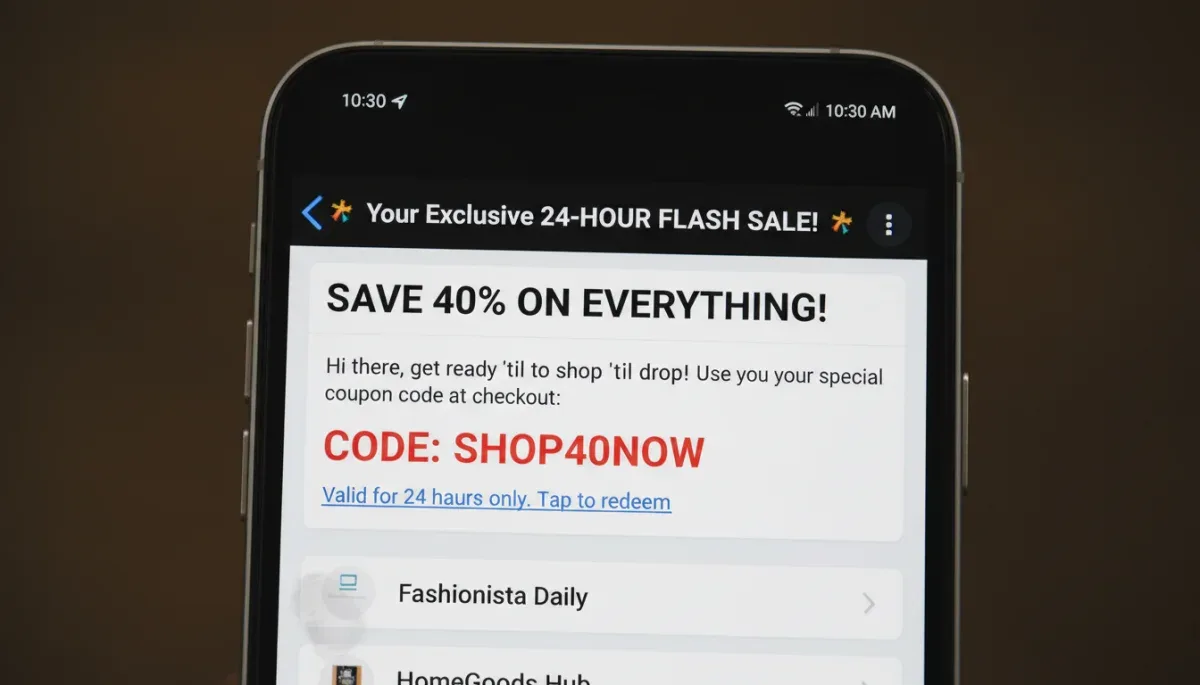
Once an abandonment event is logged, commercial marketing systems do not immediately generate a price concession. Retailers design staggered communication workflows to protect their profit margins. The initial message in a recovery sequence typically serves as an administrative reminder rather than an incentive. Sent between one and four hours after site departure, this email alerts the shopper that items remain reserved or saved, relying on visual product imagery and simple call-to-action buttons to prompt a return without reducing the purchase price.
The deployment of abandoned cart discounts generally takes place in a second or third communication, commonly transmitted between twelve and forty-eight hours after the initial cart activity. Retail automation platforms evaluate whether the customer opened the previous reminder or returned to the site organically. If no checkout activity is detected, the workflow engine checks merchant rules to determine whether the shopper qualifies for a financial incentive, which usually takes the form of a percentage reduction, a flat dollar credit, or waived standard shipping fees.
To prevent abuse, modern recovery software generates unique, single-use promotional vouchers rather than generic public codes. The automation engine communicates with the merchant platform application programming interface to create a dynamic code linked directly to the shopper account or email address. These single-use codes contain built-in expiration dates, often set to expire between twenty-four and seventy-two hours after generation. Once the designated deadline passes, the promotional voucher automatically deactivates inside the store database, preventing retroactive redemption.
Why certain items never qualify for cart codes
Shoppers often assume that any merchandise left in an online cart will eventually yield a markdown, but merchant product rules frequently override automated discount workflows. Retailers operate on variable gross margins across different merchandise categories, meaning that items with narrow markups cannot sustain promotional reductions without causing the retailer a direct financial loss. As a result, product catalog configurations automatically exclude specific inventory types from promotional email workflows.
Clearance items and heavily discounted promotional products almost always carry exclusions. When a retailer reduces an item to clearance, the product is already marked down to a margin floor designed to liquidate excess stock. Marketing software contains product-level flags that suppress discount generation if the items inside the cart carry an existing markdown tag. In these cases, the automated system may still deliver an email reminder showing the left-behind items, but the message will omit promotional voucher codes entirely.
Brand partner agreements also impose strict limitations on promotional pricing. Many third-party manufacturers enforce minimum advertised price policies, legally barring retailers from discounting brand-name goods below a set threshold. When an e-commerce cart contains products subject to strict pricing rules, consumer electronics from major manufacturers, or licensed luxury apparel, the backend engine detects the restricted brand metadata and prevents discount code generation. Adding a single non-eligible item to an otherwise qualifying basket can occasionally invalidate the discount for the entire order.
Common merchandise exclusions
- Final sale and clearance goods: Products marked down for inventory clearance generally sit below retailer discount thresholds.
- Price-protected brand partner items: Third-party product lines governed by minimum advertised price agreements cannot accept automated codes.
- Gift card purchases: Stored-value digital cards and prepaid certificates are universally excluded from promotional price reductions.
- Limited-edition releases: Scarcity-driven capsule collections and high-demand product launches bypass recovery incentive sequences entirely.
- Everyday low-price staples: High-volume essential goods with minimal markups do not permit promotional margin erosion.
Technical limitations and tracking barriers
The technical architecture required to execute abandoned cart marketing means that many legitimate browsing sessions fail to register with merchant servers. Browser privacy enhancements and ad-blocking extensions present a primary barrier to recovery tracking. Tools that restrict third-party scripts, disable common tracking pixels, or block network telemetry prevent customer data platforms from recording cart changes. If the script responsible for reporting the add-to-cart event is blocked by your browser, the retailer system registers no activity to act upon.
Apple Mail Privacy Protection and modern privacy-focused operating system features introduce additional obstacles for merchants. When an email client routes incoming messages through proxy servers and hides real user IP addresses, marketing automation systems struggle to accurately determine open rates, engagement levels, and downstream site visits. If an automated workflow depends on tracking whether you opened the first reminder email before delivering a subsequent discount code, privacy filtering can break the trigger chain, ending the communication loop prematurely.
Furthermore, cross-device behavior commonly disrupts tracking continuity. A consumer who adds items to a shopping cart on a smartphone during a commute, but later opens an email on a desktop computer without logging in, presents two distinct data profiles to the merchant system. Unless the customer clicks a tracking link inside the recovery email that explicitly carries cross-domain session parameters, the desktop checkout cannot reconcile with the mobile session. This fragmentation can cause the promotional voucher to register as invalid or prevent the store platform from applying the code to the cart.
Inventory risks and price fluctuation rules
Intentionally leaving items behind in an online cart to solicit a discount carries tangible logistical risks for the shopper. Placing a product into a digital shopping cart does not reserve that merchandise in the retailer distribution center. Unless a retailer uses an active checkout reservation timer—which is uncommon outside of event ticketing and flash-sale storefronts—the item remains available for purchase by any other consumer browsing the catalog. If inventory counts for a desired size or style are low, waiting twenty-four to forty-eight hours for an email discount often results in the item selling out completely.
Automated inventory management systems regularly update catalog listings based on dynamic demand metrics. When warehouse quantities fall below a designated threshold, merchant systems can automatically reassign products to backorder status or unpublish them from the active storefront. If an item in your abandoned cart goes out of stock while you wait for a promotional incentive, the direct link inside the recovery email will return an out-of-stock warning or route to a dead catalog page, rendering the potential discount useless.
Price fluctuations present another significant limitation. E-commerce platforms frequently run scheduled promotional cycles that expire at midnight local or platform time. If you initiate a cart during a weekend sitewide promotional event and abandon the session hoping for an additional layered discount, the base price of the item may revert to standard retail value before the recovery email arrives. Because promotional terms almost universally prohibit stacking automated recovery vouchers on top of expired base offers, your total order cost can end up higher than it would have been during your initial visit.
Factors that void cart promotions
- Depleted stock reserves: Available inventory is consumed by paying customers while the abandoned cart waits in an automated queue.
- Base promotion expiration: Temporary storefront markdowns conclude before the recovery discount sequence reaches delivery.
- Order minimum deficits: Removing an item after receiving a threshold-based code drops the cart subtotal below qualification limits.
- Strict single-use redemption flags: Clicking the discount link once can mark the dynamic coupon as redeemed within server logs.
How to verify cart promotions before checkout
When an abandoned cart email containing a discount code arrives, you must examine the specific conditions governing the voucher before relying on the savings. Retailers embed detailed redemption parameters inside the email footer or within a linked terms and conditions landing page. The most critical factor to inspect is the minimum spending threshold. Automated codes frequently require a subtotal commitment, such as fifty or one hundred dollars, calculated prior to the addition of sales tax, shipping fees, or regional surcharges.
Check the expiration timestamp immediately upon receiving the message. Recovery promotions are engineered to create immediate purchasing urgency, meaning that validation periods are substantially shorter than standard public newsletter codes. Many automated vouchers expire within twenty-four to forty-eight hours of transmission. The system clock relies on the server time zone of the merchant, which may not align with your local time. Waiting until late evening to finalize a transaction can cause you to miss an afternoon expiration cutoff.
Finally, confirm how the promotion interacts with shipping and handling fees. A ten percent discount code may save five dollars on a fifty-dollar apparel order, but if applying that private code invalidates a standard free shipping threshold, the overall cost of the order can actually increase. Most e-commerce systems evaluate free shipping eligibility based on the post-discount subtotal. If a promotional voucher drops your order value below the required standard shipping minimum, carrier delivery fees are added back to the final invoice, negating the financial benefit of the recovery code.
At a glance
| Factor | What to know |
|---|---|
| User identification | The store must capture your email through an account login, checkout entry, or newsletter signup to send an offer. |
| Delivery timing | Incentive discounts rarely arrive immediately and usually appear between twelve and forty-eight hours after abandonment. |
| Product eligibility | Clearance merchandise, price-restricted brands, and low-margin catalog items are routinely excluded from cart codes. |
| Inventory security | Items left in an abandoned cart are not reserved and can sell out before an email discount is delivered. |
Frequently asked questions
Why did I receive a reminder email without a discount code?
Retailers structure recovery workflows to protect their profit margins. The initial message sent after abandonment is almost always a neutral reminder designed to recover the sale at full price. Discount incentives are typically reserved for subsequent emails in the automated sequence or restricted to first-time shoppers who have never placed an order.
Can abandoned cart discounts be combined with other coupons?
Most e-commerce checkout software limits orders to one promotional voucher per transaction. When a merchant issues an automated cart recovery code, the checkout engine typically prevents you from stacking it alongside sitewide holiday promotions, military discounts, rewards points redemptions, or affiliate coupon codes.
Do abandoned cart emails work if I shop in private browsing mode?
Private browsing modes disable persistent cookies and purge local session data when the window closes. Unless you actively sign into your permanent store account or type your email address into an initial checkout form during that specific private session, the merchant system cannot associate your cart with your identity.
Will abandoning a cart repeatedly generate larger discounts?
Modern marketing platforms track customer purchase history and frequency. If an account repeatedly abandons carts without buying, the system flags the profile as incentive-dependent and suppresses promotional generation. Retailers set frequency caps to prevent existing customers from systematically gaming the automated recovery system on regular orders.
The bottom line
Abandoned cart discounts are automated merchant tools designed to salvage unconverted sales, not guaranteed shopping markdowns. While pausing before a purchase can yield savings on regular-priced items from major retailers, it introduces the risk of stock depletion and promotion expiration on time-sensitive goods. Before leaving items behind, check whether the products are low in stock or part of an ending sitewide promotion, and confirm that saving a modest percentage will not cost you more in lost inventory or added shipping fees.
Written by
Maria Eduarda
Maria Eduarda writes about clothes, discounts and electronics for flowershein.com. Each article explains how things work, compares published details such as prices, policies and program rules, and points readers to the official source before they decide.