
How Buy Now Pay Later Plans Impact Online Retail Returns

Advertisement
Using installment services alters the standard refund process because your transaction involves two separate legal agreements: one with the online retailer for the physical goods and one with a third-party financial provider for the installment loan. When you send an item back, the store does not directly refund your bank account; instead, it notifies the financial lender to adjust or close your remaining balance.
This payment structure helps consumers manage upfront cash flow when buying wardrobe updates, home decor, or electronics, but the catch is that processing times take significantly longer and you may still be required to make scheduled payments while your package travels back to the warehouse.
The triangular relationship between shopper, store, and lender
Standard online purchases involve a direct line between your debit card or credit card and the retail merchant. When you return an item purchased under that standard model, the merchant issues an electronic refund through their payment gateway directly back to the original funding card. With buy now pay later returns, a third party operates as an intermediary financier. Popular providers such as Klarna, Afterpay, Affirm, and PayPal Pay in 4 pay the retailer on your behalf at checkout, and you agree to repay that lender across three, four, or more installments.
Advertisement
Because the retailer has already received payment from the lending service, their system does not possess your primary banking or card details for that specific order. When the merchant accepts your return, their obligation is to credit the lender rather than deposit funds directly into your personal checking account. This multi-party arrangement means that resolving a return requires synchronization between the merchant warehouse, the retailer billing department, and the technical platform of the lending provider.
Problems often arise when shoppers assume that initiating a return label with a store automatically cancels their repayment agreement. The loan contract remains active and legally binding until the merchant receives the physical package, inspects the returned goods, logs the acceptance in their inventory database, and transmits an electronic refund confirmation to the installment provider.
How installment refunds and adjustments are calculated
Calculating refunds through installment providers depends heavily on whether you return your entire order or keep selected items from a multi-item purchase. When you return a complete order before making subsequent payments, the lender cancels future scheduled installments and refunds any initial down payment you submitted on the purchase date. However, partial returns introduce a recalculation formula that can confuse shoppers who track their monthly account balances.
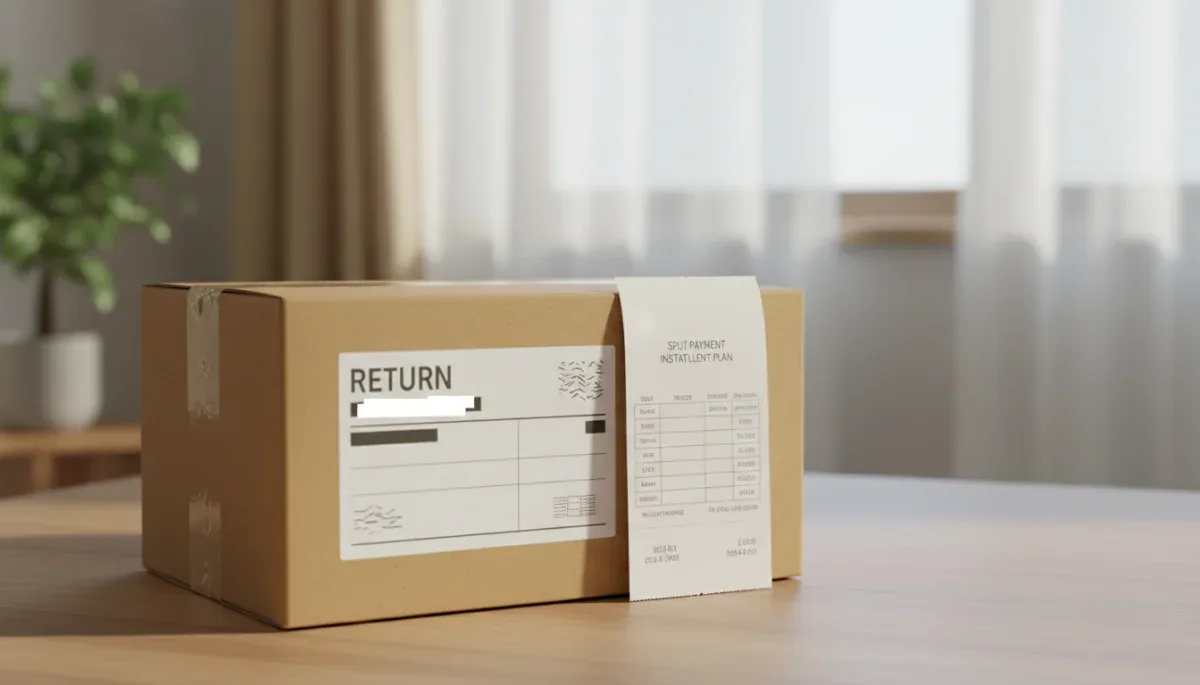
In a partial return, installment providers generally apply the value of the returned item to the final scheduled installments first, rather than distributing the reduction equally across all remaining payments. This approach is standard among major installment lenders operating in the United States.
Standard refund adjustment steps for split payments
- The merchant calculates the net merchandise value of the accepted return after subtracting any applicable restocking fees or prepaid label costs.
- The merchant transmits the verified dollar amount to the installment provider network.
- The installment provider deducts that dollar amount starting from the final installment of the loan agreement and working backward toward earlier payments.
- If the value of the returned merchandise exceeds the remaining unpaid installments, the provider issues a direct cash refund for the difference back to the original card used for previous payments.
Because adjustments apply from the back of the payment schedule forward, your very next scheduled payment might remain unchanged if the returned item was worth less than the total outstanding balance. Shoppers must review their updated payment schedule in their loan account portal rather than assuming their next bi-weekly deduction will be lower.
Managing payment schedules while packages are in transit
The time between dropping a parcel at a shipping carrier and the retailer logging that parcel into their warehouse inventory can range from several business days to multiple weeks. During peak retail periods or holiday seasons, return intake delays expand substantially. A central risk with buy now pay later returns is the occurrence of scheduled due dates while the return package is still moving through transit networks.
Most installment providers expect payments to continue according to the original agreement until the merchant formally reports the return. If an automated draft fails because you emptied your checking account or locked your card, the lender may assess late fees, restrict your ability to use the payment method for future orders, or report delinquent activity to consumer reporting agencies, depending on the specific provider terms.
To avoid unexpected charges or delinquency notices, several major platforms provide a temporary reporting mechanism within their mobile applications. In services like Klarna and Afterpay, users can select the specific order and press an option indicating that a return is in progress. Doing so typically pauses upcoming payment deductions for a limited window, often between fourteen and twenty-one days, allowing the package sufficient time to reach the merchant warehouse for scanning.
Store credits, restocking fees, and non-refundable costs
Retailer return policies do not always grant original-payment refunds. Many affordable fashion retailers, liquidation outlets, and marketplace sellers issue refunds strictly in the form of electronic store credit, digital gift cards, or loyalty points. Choosing or accepting store credit completely alters your financial obligations toward the installment lender.
When an online store issues store credit, their billing system marks the order as fulfilled and satisfied through an alternative balance. Consequently, the merchant does not send a monetary credit back to your installment lender. You remain fully responsible for paying off every remaining installment on your loan with cash, even though you no longer possess the physical merchandise and only hold store credit.
Key policy differences that affect your final balance
- Store credit resolutions require you to complete your full installment cash schedule out of pocket.
- Prepaid return shipping deductions decrease the net refund reported to the lender, leaving a small remaining balance on your loan.
- Restocking fees charged by electronics or furniture sellers are retained by the store and cannot be wiped out by the installment provider.
- Original shipping charges paid at checkout are rarely reimbursed by merchants and remain part of your active repayment balance.
Before selecting store credit during an online return submission, confirm whether you are prepared to finish paying real money toward your installment loan. If you prefer to eliminate your ongoing loan payments, you must select the original payment method option whenever the merchant policy permits.
Disputing stalled returns and protecting your consumer rights
When an online merchant fails to process an intake scan or disputes receiving a returned parcel, the shopper must initiate formal resolution steps. Because installment contracts represent financial credit products, consumers maintain formal rights under federal oversight, including rules clarified by the Consumer Financial Protection Bureau regarding payment dispute mechanisms for installment lenders.
If thirty days have elapsed since your tracking number showed delivery at the merchant warehouse without an updated loan balance, submit an official dispute through your installment provider portal. You must provide clear documentation showing the tracking number, carrier delivery timestamp, return authorization slip, and order invoice. The lender is required to open an inquiry and evaluate the merchant shipping records before enforcing further collections on the disputed sum.
Keep physical drop-off receipts provided by postal counters, shipping drop boxes, or carrier retail stores. A tracking status that reads as delivered serves as your primary evidence when proving to a financial company that merchandise was returned in compliance with the retailer policy terms.
At a glance
| Factor | What to know |
|---|---|
| Refund route | The store pays the lender directly, and the lender adjusts your balance or refunds your card. |
| Partial return order | Credits are deducted from the final scheduled payment first rather than divided equally. |
| Payment pauses | Most provider apps let you report a return in transit to pause payments for up to three weeks. |
| Store credit impact | Accepting gift cards or store vouchers leaves your cash loan balance active and fully due. |
Frequently asked questions
Do I keep paying my installments after mailing back a return?
Yes, you must continue payments unless you report the return inside your provider app to pause scheduled drafts. If the merchant processes the return later, any extra money you paid toward completed installments is refunded back to your funding card.
How long does an installment refund take to appear?
Most installment refunds take between five and fourteen business days after the merchant scans the returned item. The retailer must first register the return in their system, after which the lender processes the adjustment to your bank or card.
What happens if I return an item for store credit?
You still owe the remaining loan balance in cash to your installment lender. Because the merchant issued a store voucher instead of returning money to the lender, the third-party loan agreement remains active until paid in full.
Will a delayed return affect my credit score?
A delayed return can harm your credit if payments are missed without notifying the provider. While many short-term installment plans do not report on-time payments, unpaid balances sent to collections or reported past due can damage your credit profile.
The bottom line
Returning online merchandise purchased through installment plans requires monitoring both the store return policy and your third-party loan account. Always retain your carrier tracking receipt, report active returns inside your lender mobile app to prevent unauthorized drafts, and remember that store credit leaves your cash loan balance active. Before initiating a return, check the merchant official return instructions and your current installment balance to ensure all deductions and refunds are calculated correctly.
Written by
Mariana Viana
Mariana Viana writes about clothes for flowershein.com. Each article explains how things work, compares published details such as prices, policies and program rules, and points readers to the official source before they decide.