
How credit card purchase protection covers damaged items
Advertisement
Credit card purchase protection reimburses cardholders for the cost to repair or replace eligible items that are accidentally damaged or stolen shortly after purchase. It acts as an embedded insurance policy provided directly by your card network or issuing bank when you pay for the entire transaction with the covered card.
This coverage helps shoppers who receive broken merchandise from online retailers or damage items accidentally during initial setup, though strict documentation requirements and policy limits apply. Because each credit card issuer partners with different benefit administrators, understanding the underlying claim rules prevents unexpected denials when an online package arrives broken.
Understanding what purchase protection covers
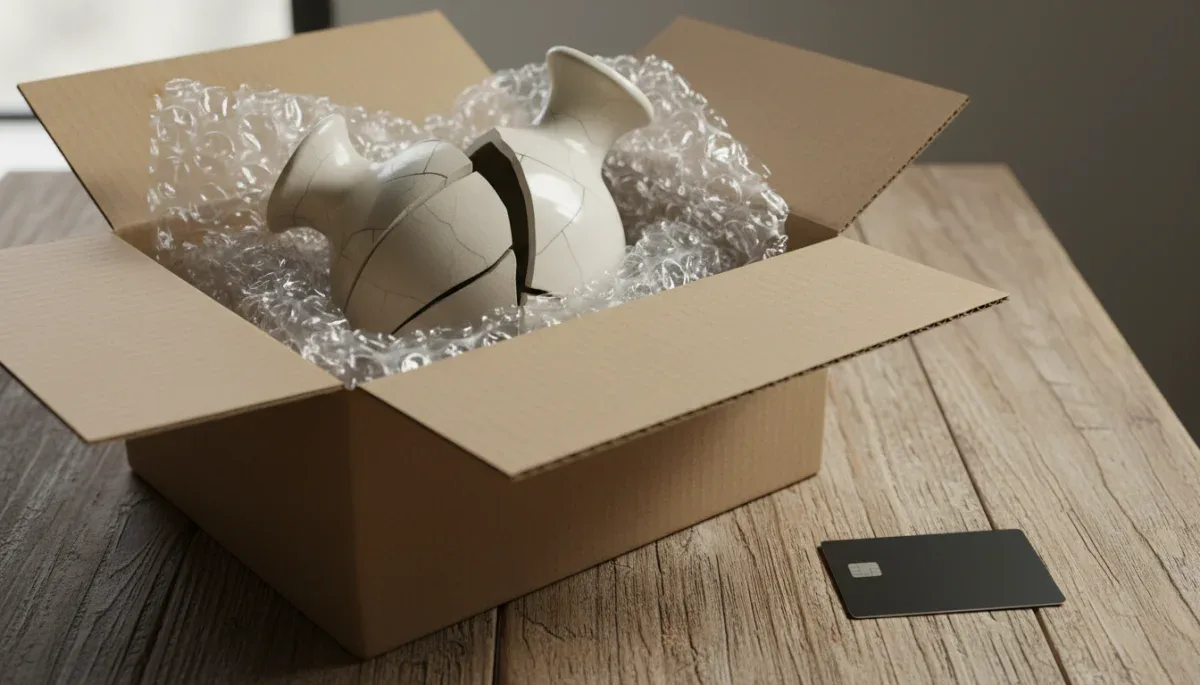
Purchase protection is a built-in card benefit that guards tangible personal property against accidental physical damage and theft. When an online retailer delivers an order that arrives shattered, cracked, or mechanically non-functional, purchase protection can cover the financial loss if the seller declines to issue a refund or replacement. Unlike general merchant return policies, this protection is backed by an underwriting insurance company tied to your payment network.
Advertisement
The protection takes effect on the exact calendar date of the completed retail transaction and remains active for a set window, typically ranging from 90 to 120 days depending on the card agreement. For an item to qualify, you must charge either the full purchase price or the portion remaining after redeeming card rewards points directly to the eligible credit card account. Items bought with third-party store financing or split payments across non-qualifying payment methods generally lose coverage eligibility.
It is important to distinguish between transit damage and cosmetic flaws. Purchase protection covers sudden, unforeseen physical breakage that impairs the functioning or structural integrity of the product. Superficial packaging scuffs that do not affect the internal merchandise are rarely covered. Furthermore, standard purchase protection does not replace manufacturer warranties for long-term electrical defects, but it steps in when an item sustains sudden damage during unboxing or initial domestic handling.
How purchase protection differs from shipping disputes

Shoppers often confuse purchase protection with the standard billing dispute process governed by the Fair Credit Billing Act. A billing dispute, often called a chargeback, addresses transactional errors, unauthorized charges, or merchants failing to deliver goods as agreed. If an online retailer sends a completely wrong item or fails to send a tracking number altogether, a billing dispute is the appropriate regulatory mechanism to recover funds.
Purchase protection operates under an insurance model rather than a merchant payment reversal. When you file a purchase protection claim for a broken delivery, the card issuer pays you directly out of their insurance reserve rather than taking the funds back from the store merchant account. This distinction is critical for shoppers dealing with third-party sellers on marketplace platforms where return windows have closed or seller support has stopped responding.
Most card issuers require cardholders to exhaust direct resolution attempts with the merchant before opening an insurance claim. If the merchant agrees to replace the broken piece or offers a partial refund, the card insurance administrator only considers covering the remaining out-of-pocket loss. Filing both a chargeback and a purchase protection claim simultaneously for the exact same transaction is prohibited by card terms and will trigger an immediate administrative freeze on the case.
Standard filing deadlines and reimbursement limits
Every card issuer sets defined thresholds for both the monetary limit per claim and the timeframe in which you must report the loss. At the time of writing, entry-level credit cards with no annual fee often cap coverage at $500 per incident and up to $50,000 per cardholder account annually. Premium travel and rewards cards frequently extend coverage to $10,000 per occurrence, reflecting their higher account fees.
Time limits for filing are strictly enforced by third-party claim administrators. Most policies require the policyholder to notify the benefits administrator within 60 days of the damaging incident, followed by a mandatory window—frequently 90 days from the initial notice—to submit all supporting paperwork. Missing these stated deadlines results in an automatic forfeiture of benefits regardless of the severity of the damage.
Key timeframes and limits to review
- Notice of loss deadline: Typically between 60 and 90 days from the date of the incident.
- Documentation submission window: Usually 90 days following your initial notice submission.
- Per-item dollar cap: Generally ranges from $500 on standard cards to $10,000 on premium products.
- Annual aggregate limit: Commonly capped between $10,000 and $50,000 per card account per calendar year.
Evidence and paperwork needed to submit a claim
To successfully claim reimbursement for a damaged online order, you must provide comprehensive documentary evidence proving both the purchase and the extent of the destruction. Card benefit administrators evaluate claims through digital portals, and missing a single mandatory document can delay processing for several business weeks. Maintaining records of the digital transaction from the moment of purchase ensures a smoother submission.
The claims adjuster will require verification that the purchase occurred on your covered account and that the item cannot be resolved through standard retail channels. If an item is repairable, such as a damaged appliance or electronic device, the administrator may request a formal repair estimate from an authorized service facility before deciding whether to pay for repairs or reimburse the full replacement cost.
Mandatory claim documents
- Itemized store receipt: A copy of the detailed invoice listing the specific item description and price.
- Card billing statement: The monthly account statement showing the matching merchant charge.
- Photographic evidence: Clear photos showing the broken item, the shipping box, and any visible serial numbers.
- Merchant correspondence: Copies of emails showing the retailer refused a refund, exchange, or return.
Common exclusions that void damaged item claims
While credit card purchase protection offers broad coverage, every card policy contains a specific list of non-covered items and circumstances. Items that are lost or misplaced without proof of accidental damage or criminal theft are excluded from basic protection tiers. Knowing these exclusions helps set realistic expectations before investing time into an administrative claim.
Perishable goods, living plants, consumables, and cosmetics are universally excluded from damage coverage. Similarly, items purchased for commercial or professional use rather than personal household use must be covered under specialized business credit cards rather than personal accounts. Motorized vehicles, including electric scooters and car parts, also sit on the standard exclusions list across all major payment networks.
Standard policy exclusions to consider
- Perishable and consumable items: Food, supplements, beauty products, and live floral arrangements.
- Used and refurbished goods: Pre-owned merchandise, auction items, or products bought without factory warranties.
- Motorized transit items: Vehicles, mopeds, electric bicycles, aircraft, and replacement automotive hardware.
- Items lost in shipping transit: Packages marked lost by postal carriers before delivery confirmation occurs.
Step-by-step process for filing with your card administrator
Securing a payout begins the moment you unpack damaged merchandise. First, take high-resolution photographs of the exterior shipping box, the shipping label, the interior packaging materials, and the damaged product itself from multiple angles. Do not discard the broken item or its shipping packaging until the entire claim is formally finalized and paid, as administrators occasionally request that items be mailed to an inspection depot.
Next, contact the online retailer through their formal customer support channel to request a return label or replacement. Save all chat transcripts, support ticket confirmations, and emails. If the retailer rejects your request, logs an unresolved dispute, or only offers partial store credit, locate the benefits administrator contact details on the back of your physical card or through your online banking portal.
Submit the initial claim notice through the designated digital portal, such as Card Benefit Services for Visa and Mastercard accounts or the online protection center for American Express. Upload your itemized receipt, the credit card statement reflecting the transaction, the merchant communication records, and your photographs. Once uploaded, track the claim status weekly and respond immediately if an adjuster requests additional signed declarations.
At a glance
| Factor | What to know |
|---|---|
| Coverage period | Protection lasts 90 to 120 days from original transaction date. |
| Filing deadline | Must report damage within 60 days of the incident occurring. |
| Merchant step | Cardholders must request merchant resolution before filing card claims. |
| Evidence rule | Physical photos and original itemized store receipts are mandatory. |
Does purchase protection cover items that arrive broken in the mail?
Yes, purchase protection covers items damaged during shipping if the merchant refuses a replacement. You must document the physical destruction with clear photographs and provide the official delivery invoice showing the item was purchased entirely on the covered card.
What is the difference between purchase protection and a chargeback?
A chargeback disputes a merchant transaction to reverse charges for billing errors or non-delivery. Purchase protection is an insurance payout provided directly by the card issuer to cover broken or stolen merchandise without reversing the store payment.
Can I throw away the broken item after filing the claim?
No, you should never discard the broken item until the claim is approved. Card administrators reserve the right to inspect the item, request an official repair estimate, or ask you to mail the damaged goods to a processing center.
Are refurbished or used online purchases covered by this benefit?
No, refurbished, antique, and pre-owned items are excluded from standard credit card purchase protection. The policy requires items to be purchased in brand-new condition directly from a recognized retail store or authorized distributor.
The bottom line
Credit card purchase protection serves as a dependable financial safeguard when online purchases arrive damaged and merchants refuse to help. By keeping itemized store receipts, photographing package damage immediately, and adhering strictly to the sixty-day reporting window, you can recover repair or replacement costs without unnecessary delays. Before making significant retail purchases, always verify your card issuer's exact dollar limits and exclusion terms directly in your official benefits guide.
Written by
Rita Lima
Rita Lima writes about clothes for flowershein.com. Each article explains how things work, compares published details such as prices, policies and program rules, and points readers to the official source before they decide.