
Digital manufacturer coupons versus store coupons at checkout
Advertisement
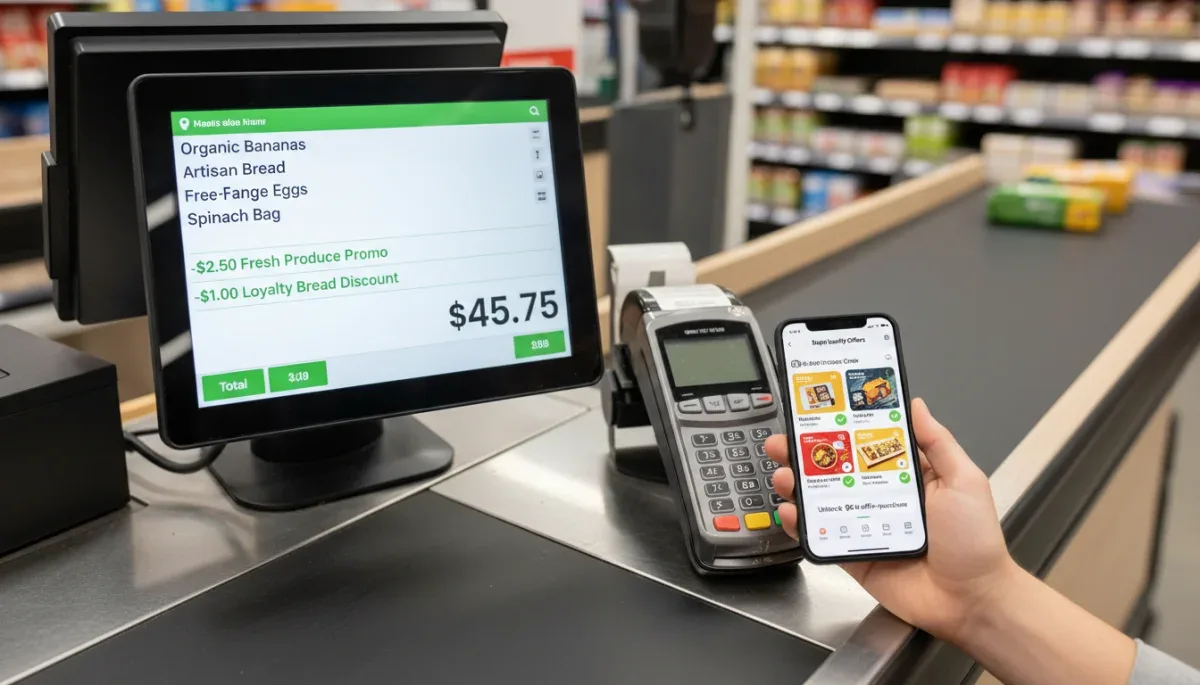
Digital manufacturer coupons are funded directly by product brands to lower the price of a specific item, whereas store coupons are funded by the retailer to attract foot traffic or move inventory. Knowing which type of discount you load to your account helps you anticipate register totals, determine whether stacking is permitted, and avoid point-of-sale conflicts at checkout.
This breakdown helps shoppers navigate automated store apps and self-checkout lanes without surprise rejections, though every retail chain maintains unique software rules regarding how digital offers attach to purchases. While paper clipping historically made the origin of a coupon obvious, digital savings portals frequently display both types side by side, making clear identification essential before you scan your items.
How digital manufacturer coupons function behind the scenes
A digital manufacturer coupon is legally an agreement between the product manufacturer and the retailer. When consumer goods companies such as Procter & Gamble, Unilever, or General Mills issue discounts, they contract with digital clearinghouses like Inmar Intelligence to manage the distribution and settlement process. The retailer agrees to accept the digital offer at checkout and deduct that specific dollar or percentage amount from your total. Afterward, the retailer submits the electronic transaction record to the clearinghouse to receive full monetary reimbursement for the face value of the coupon, plus an agreed-upon retail handling fee.
Advertisement
Because the brand reimburses the retailer, these digital vouchers have strict compliance controls programmed into their digital barcodes. When you clip digital manufacturer coupons within an app such as Kroger Plus, Target Circle, or Dollar General, that offer is assigned to your unique loyalty account identifier. It operates under standard GS1 barcode logic, which matches the purchase against strict manufacturer requirements, including brand, family code, volume size, and exact count.
If you purchase an item that deviates from these parameters by even a single ounce, the point-of-sale terminal will reject the attachment automatically. Retailers cannot manually override these digital failures in many modern automated systems because an improper redemption prevents the store from receiving reimbursement from the manufacturer clearinghouse during post-shift reconciliations.
How store coupons differ in funding and rules

Store coupons are funded entirely by the retailer and represent an immediate mark-down on store margin rather than a reimbursable credit. When a supermarket chain offers two dollars off a bakery purchase or five dollars off a basket-level spending threshold, the individual retail corporation absorbs that reduction in gross profit. Because no outside manufacturer reimburses the store for these promotions, the company has complete discretion over how the discount is defined, modified, and enforced at the register.
Retailer discounts often target specific departments or general basket amounts rather than individual Universal Product Codes. For example, a store coupon might take ten percent off all store-brand pantry staples or provide a five-dollar discount on a total purchase of thirty dollars or more. These offers frequently carry terms that require you to reach a pre-tax total after all other store discounts have been calculated.
Unlike third-party manufacturer offers, store promotions can be programmed to stack across multiple categories, or they can be configured to exclude certain departments entirely, such as dairy, alcohol, gift cards, or prescription medication. Retailers dictate these exclusions based on state-level pricing regulations and profit margins, ensuring that promotional deductions do not drive store inventory into a net financial loss.
Coupon stacking rules and point-of-sale limits
Coupon stacking is the practice of applying more than one promotional discount to a single item at checkout. In traditional couponing, the universal baseline rule allows a shopper to combine one manufacturer coupon and one store coupon on the same individual product. This works because one party is paying the retailer back, while the retailer is voluntarily lowering its own shelf margin on that same transaction. However, modern checkout software places rigid technical restrictions on this practice.
No major U.S. grocery or big-box chain allows you to combine two digital manufacturer coupons on a single item. If you clip a digital manufacturer coupon for two dollars off laundry detergent and hand the cashier a paper manufacturer coupon for the same product, the register will recognize that a manufacturer discount has already attached. The register will either reject the paper coupon outright or de-select the digital offer in favor of the paper one, depending on the store's point-of-sale configuration.
Standard stacking scenarios at major retail chains
- One manufacturer offer plus one store offer: Permitted at chains such as Target, Walgreens, and select grocery retailers, provided the store coupon does not state otherwise in its fine print.
- Two manufacturer offers on one product: Never allowed by point-of-sale systems, regardless of whether one coupon is digital and the other is printed.
- Category or basket coupons combined with item coupons: Generally allowed, provided the qualifying spending threshold is met after individual store-level markdowns are calculated.
- Multiple identical digital coupons: Generally restricted to one redemption per account transaction, after which the digital offer disappears from the clipped wallet.
Checkout processing order and barcode data
The sequence in which discounts are applied can change your final out-of-pocket payment, particularly when threshold promotions are involved. Modern registers process scanned items through an internal logic tree dictated by the point-of-sale software. In most supermarket systems running NCR or Toshiba enterprise software, individual item-level digital manufacturer coupons are applied first, matching against the qualifying items identified in the transaction log.
Once item-level discounts are resolved, the register evaluates store-level threshold coupons. If a promotion requires a spending target of forty dollars, the software checks the net running total. Depending on the retailer's written policy, that forty-dollar threshold might be required before or after manufacturer discounts are deducted. If the system requires forty dollars after manufacturer savings, and your digital manufacturer coupons reduce your balance to thirty-eight dollars, the threshold discount will fail to attach.
The transition to GS1 DataBar scanning has automated this process completely. These complex barcodes contain embedded expiration dates, precise size requirements, and application limits. When your loyalty account phone number is entered, the register software queries the cloud database, pulls your clipped offers, and compares the GS1 parameters against the items in your cart within seconds. If an offer does not clear the programmatic logic of the register, no cashier intervention can retroactively link the digital manufacturer credit to the purchase.
Return policies and value clawbacks
Returning an item purchased with a digital coupon reveals another major operational difference between manufacturer and store promotions. Because manufacturer coupons represent an external payment method toward the goods, retail return desks treat that value differently from a routine price reduction. If you purchase a twenty-dollar personal care item using a five-dollar digital manufacturer coupon, your net cash paid is fifteen dollars.
If you return that item, standard return policies at most national retailers state that you will receive a refund only for the net amount paid, which is fifteen dollars. The five-dollar coupon value is permanently consumed upon initial checkout; the point-of-sale system does not credit the coupon back to your digital loyalty account, nor does it return the five dollars in cash or store merchandise credit. The manufacturer settlement has already been flagged as completed in the transaction database.
Store-level coupons, however, are sometimes handled through proportional value distribution. If you use a store coupon that takes ten dollars off a fifty-dollar purchase spread across three items, the register distributes that ten-dollar deduction proportionally across all three items based on their individual price. If you return one of those items later, your refund reflects that item's adjusted price, rather than its original shelf price, ensuring the retailer does not pay out cash for an unearned store discount.
Common reasons digital coupons fail to attach
When digital discounts do not apply at checkout, the issue is almost always caused by system validation checks rather than hardware errors. Shoppers often assume that tapping an offer in an app guarantees the discount will appear, but automated point-of-sale engines enforce multiple pre-conditions before authorizing the price reduction.
A primary cause of failure is an incorrect product variation. Manufacturers frequently release nearly identical packaging for items that belong to different product families under their brand umbrella. If a digital manufacturer coupon applies to body wash with a specific formula or size, buying the standard version instead of the qualifying scent or volume will block the redemption. The register simply does not see the required Universal Product Code in the transaction log.
Key digital attachment requirements to verify
- Loyalty account link: The phone number entered at the keypad must match the exact profile where the digital offers were clipped.
- Account sync timing: Some retail databases require up to fifteen minutes to synchronize clipped coupons between the mobile application and the physical checkout lanes.
- Volume and count minimums: Multi-pack requirements or minimum ounce thresholds must be met exactly as specified in the terms.
- Pre-existing promotions: If an item is on clearance or marked down as an in-store clearance tag, store policies may explicitly prohibit digital coupon application.
At a glance
| Factor | What to know |
|---|---|
| Funding source | Manufacturer coupons are paid by the brand, while store coupons are absorbed by the retailer. |
| Stacking limits | Registers permit one manufacturer coupon per item, but some stores allow an added store coupon. |
| Refund outcome | Digital coupon values are not restored to your account or returned as cash upon return. |
| Attachment checks | POS systems require exact barcode, size, and category matches before applying the savings. |
Frequently asked questions
Can I combine a digital manufacturer coupon with a paper manufacturer coupon?
No, you cannot combine them on the same item. Retail point-of-sale systems recognize both formats as identical manufacturer credits. Applying both would constitute double redemption, which automated checkout software is explicitly programmed to block during the scanning process.
How do I identify whether a clipped coupon is a store or manufacturer offer?
Look at the small text above or below the offer title in your retailer app. Digital coupons generally contain a clear label marking them as either Store Coupon or Manufacturer Coupon to indicate which checkout rules govern their redemption.
Why did my digital coupon disappear from my app after checkout?
Most digital offers are single-use promotions tied to your account. Once the register processes the coupon against a matching item, the system flags the offer ID as redeemed and automatically removes it from your digital wallet to prevent reuse.
Do digital manufacturer coupons lower the sales tax on my purchase?
In most states, no. State tax laws typically calculate sales tax on the full price of the item before manufacturer discounts are deducted. Store coupons, however, generally reduce the taxable price because they represent an direct reduction in the retail shelf price.
The bottom line
Digital manufacturer coupons and store coupons operate through entirely different financial pipelines, and checkout registers use strict automation to keep them separate. You can maximize your savings by learning your store's written policy on combining one store promotion with one manufacturer discount on a single item. Before heading to the checkout lane, always confirm that your clipped digital coupons are fully refreshed in your account and match the exact item size and variety in your basket.
Written by
Maria Eduarda
Maria Eduarda writes about clothes, discounts and electronics for flowershein.com. Each article explains how things work, compares published details such as prices, policies and program rules, and points readers to the official source before they decide.