
How to read clothing laundry care symbols accurately
Advertisement
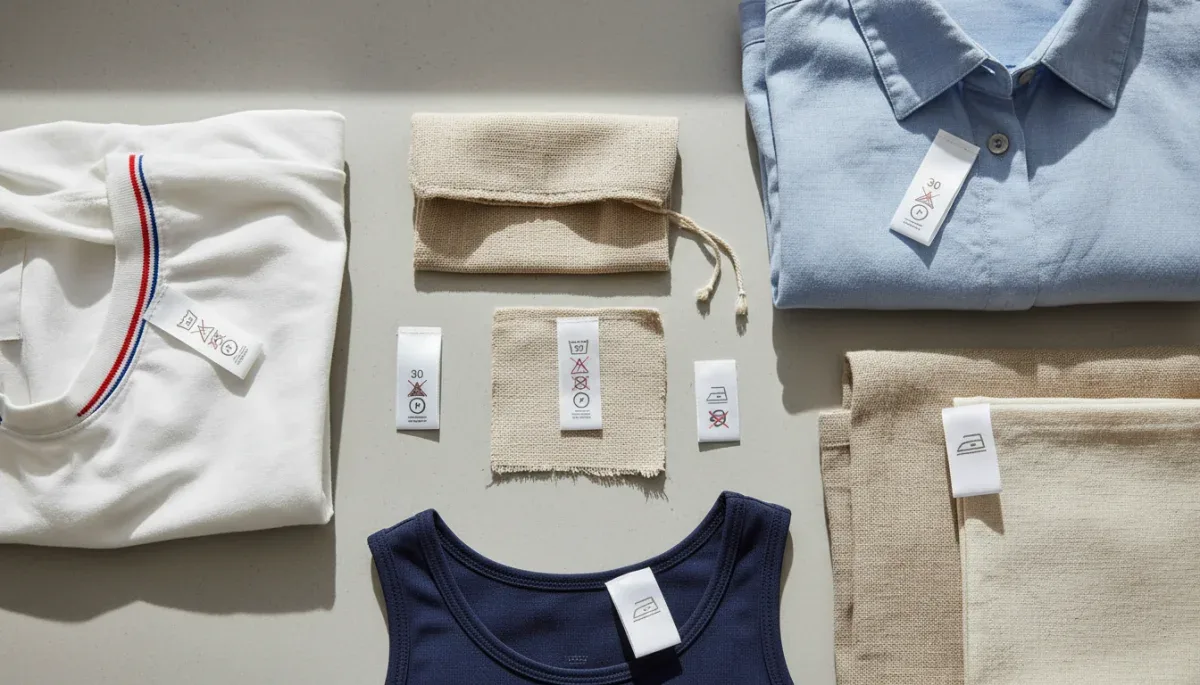
Clothing laundry care symbols communicate five essential steps of garment maintenance: washing, bleaching, drying, ironing, and professional cleaning. Reading these icons correctly ensures your apparel maintains its fit, color, and structural integrity over repeated wash cycles.
This guide helps shoppers protect both delicate and everyday garments from unexpected shrinkage, fabric warping, and dye degradation. While international standards share minor regional differences, understanding them helps you make informed laundering decisions every time.
Understanding the five core laundry care symbols
Garment labels arrange care instructions in a standard universal sequence across North America and international markets. In the United States, the Federal Trade Commission enforces the Care Labeling Rule, which requires manufacturers to provide accurate cleaning instructions using either words or standard symbols established by ASTM International (specifically ASTM D5489). Internationally, the International Organization for Standardization governs these icons under ISO 3758.
Advertisement
The symbols always appear in a predictable left-to-right order representing the cleaning process from start to finish. Recognizing this sequence allows you to quickly locate the specific instruction you need without reading extensive fine print.
The standard order of care icons
- Washtub: Specifies washing method, maximum water temperature, and cycle intensity.
- Triangle: Outlines safe bleaching agents, including chlorine and non-chlorine options.
- Square: Details drying instructions, covering tumble drying and natural air drying.
- Iron: Dictates safe ironing temperatures and steam limitations.
- Circle: Provides instructions for professional dry cleaning and commercial wet cleaning.
How to read washing symbols and temperature dots
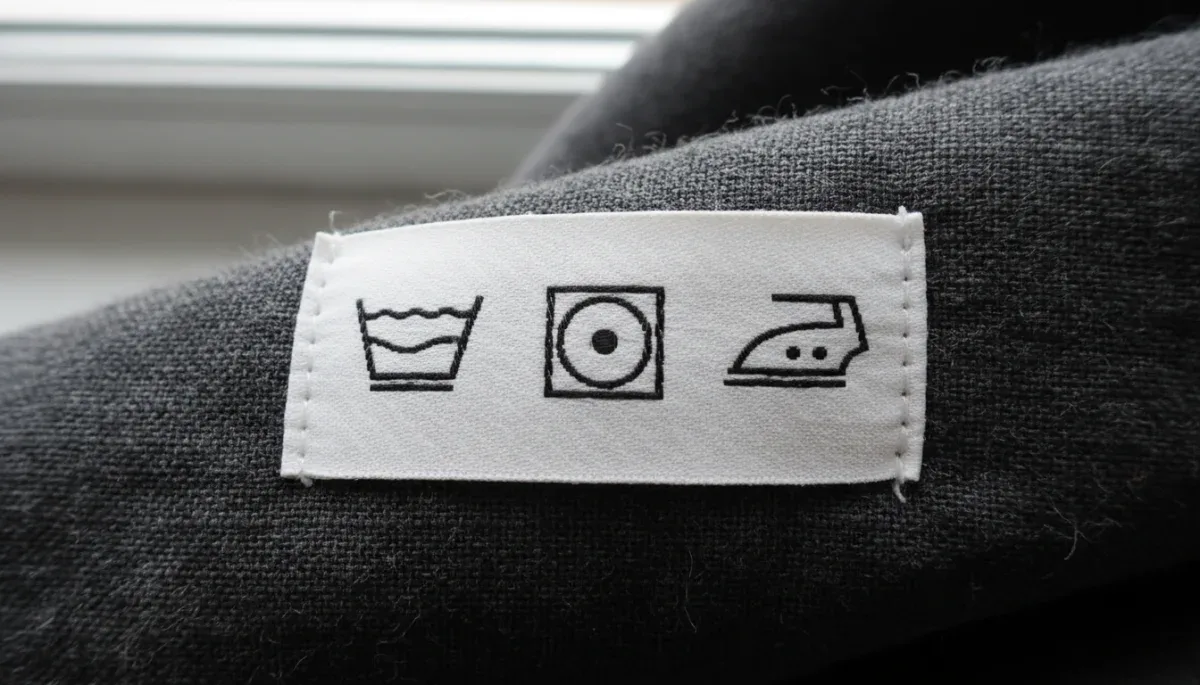
The washtub icon represents water-based laundering. An open washtub without any markings inside indicates that the garment can be washed in a standard machine at any temperature. A hand placed inside the tub means the item is suitable only for hand washing at temperatures up to 104 degrees Fahrenheit (40 degrees Celsius), requiring gentle manipulation without aggressive wringing.
Water temperature is communicated either through numeric Celsius temperatures or through a system of dots inside the tub. One dot signifies cold water (approximately 85 degrees Fahrenheit or 30 degrees Celsius), two dots represent warm water (105 degrees Fahrenheit or 40 degrees Celsius), and three dots indicate hot water (120 degrees Fahrenheit or 50 degrees Celsius). Four, five, or six dots correspond to progressively higher commercial temperatures up to 200 degrees Fahrenheit.
Lines drawn beneath the washtub signify cycle intensity. No line beneath the tub indicates a normal, standard wash cycle. A single horizontal line beneath the tub specifies a permanent press or mild mechanical action cycle designed to minimize wrinkling. Two horizontal lines indicate an extra gentle or delicate cycle, which uses reduced agitation and a slow spin speed to protect fragile weaves.
Decoding bleaching and drying symbols on garment tags
Bleaching symbols are represented by a simple triangle. An open, empty triangle means any standard laundry bleach, including chlorine-based sodium hypochlorite, may be safely applied. A triangle filled with two diagonal parallel lines restricts your choice to non-chlorine, oxygen-based bleach only. A solid dark triangle with an X through it, or an open triangle with an X, prohibits all bleaching agents entirely.
Drying symbols use a square as their base shape and distinguish between mechanical tumble drying and natural air drying. A square containing an inner circle signifies machine tumble drying. Temperature limits for tumble drying follow the same dot convention as washing: one dot indicates low heat, two dots indicate medium heat, and three dots indicate high heat. A circle with no dots allows tumble drying at any heat level, while a solid filled circle inside the square indicates no heat or air-only drying.
Air drying variations within the square icon
- Square with a horizontal line: Dry flat to prevent heavier knitwear and sweaters from stretching.
- Square with three vertical lines: Drip dry without hand wringing or machine spinning beforehand.
- Square with curved line at top: Line dry or hang dry on a clothesline or hanger.
- Square with diagonal lines in corner: Dry in the shade to protect delicate dyes from ultraviolet sunlight fading.
Ironing and professional dry cleaning symbols
Ironing instructions use a traditional flat iron silhouette. An iron with no dots indicates that the item can be pressed at any standard temperature setting with or without steam. Dots placed directly on the iron body dictate maximum safe soleplate temperatures: one dot denotes low heat up to 230 degrees Fahrenheit (110 degrees Celsius) for synthetics like nylon and acetate; two dots signify medium heat up to 300 degrees Fahrenheit (150 degrees Celsius) for wool and polyester blends; and three dots indicate high heat up to 390 degrees Fahrenheit (200 degrees Celsius) for cotton and linen.
When an iron symbol features an X across the bottom with steam lines emanating below, you must press the garment dry without using steam. An X placed directly over the entire iron icon means the fabric must not be ironed under any circumstances, as the fibers risk melting or glazing.
A simple circle represents professional textile care. Letters inside the circle, such as P, F, or W, are technical instructions for dry cleaners regarding specific chemical solvents and moisture controls. An X through the circle indicates that the garment cannot be dry cleaned and should not be submitted to commercial chemical processing.
Caring for modern synthetic fabrics and blends
Fast fashion and budget apparel frequently combine natural and synthetic fibers, such as cotton-poly blends or rayon-spandex knits. Synthetic polymers are thermoplastic, meaning heat from excessive wash water or high dryer settings causes the structural fibers to soften, warp, or permanently shrink. Always follow the care instructions for the most delicate component in any fiber blend.
When a label displays an X over a symbol, treating that instruction as an absolute restriction prevents irreversible fabric damage. If a tag is missing or illegible, opting for cold water, a gentle cycle, and flat air drying offers the safest baseline care for mixed-fiber garments.
At a glance
| Care Category | Key Rule to Follow |
|---|---|
| Washtub with dots | Dots indicate maximum water temperature from cold (one) to hot (three). |
| Underline bars | Horizontal bars call for reduced agitation such as gentle or delicate cycles. |
| Triangle variations | Diagonal interior stripes require non-chlorine oxygen bleach exclusively. |
| Square with circle | Dots inside indicate tumble dry heat; lines indicate flat, line, or drip drying. |
Frequently asked questions
What do the dots inside laundry symbols mean?
Dots represent temperature levels across washing, drying, and ironing symbols. One dot signifies low temperature or cold water, two dots mean medium temperature or warm water, and three dots designate high heat. Matching your appliance settings to these dots prevents fabric degradation.
What does a bar under a laundry symbol signify?
A horizontal bar placed underneath a symbol indicates reduced mechanical action. One bar signifies a permanent press cycle with gentle spin, while two bars demand a delicate or extra gentle cycle to protect fragile seams and loose fiber weaves.
Can you tumble dry an item if the tag says dry flat?
No, you should not tumble dry garments marked with a flat dry symbol. Machine tumbling causes heavy or wet fibers, especially wool and loose knits, to lose their structural shape, stretch unevenly, or shrink from heat exposure.
What is the difference between an empty triangle and a striped triangle?
An empty triangle permits the safe use of any commercial bleach, including chlorine. A triangle containing two diagonal stripes permits only non-chlorine, oxygen-based bleach, protecting colored or sensitive fibers from chemical stripping and yellowing.
The bottom line
Mastering laundry care symbols protects your clothing investment by preventing avoidable shrinkage, color bleeding, and heat damage. Recognizing the standard five-step sequence—wash, bleach, dry, iron, and professional clean—simplifies sorting your laundry loads efficiently. Before placing any new or unfamiliar garment into your washing machine or dryer, always check the inner care tag for heat limits and cycle restrictions to confirm the safest cleaning method.
Written by
Lucas Bastos
Lucas Bastos writes about clothes and house for flowershein.com. Each article explains how things work, compares published details such as prices, policies and program rules, and points readers to the official source before they decide.