
How student discount verification works on UNiDAYS
Advertisement
Student verification services confirm discount eligibility by cross-referencing your academic credentials against accredited university directories, active school email servers, and registrar documentation. These digital verification clearinghouses act as intermediaries between commercial retailers and academic institutions, giving businesses a dependable way to confirm that an applicant is actively enrolled in higher education before releasing gated promotional pricing.
This automated screening helps undergraduate, graduate, and vocational students access lower prices on clothing, electronics, software subscriptions, and home goods, while protecting retail merchants from coupon fraud and unauthorized discount leakage. Because retail companies rarely have direct connections to college registrars, understanding how platforms like UNiDAYS, SheerID, and Student Beans validate your status makes troubleshooting unexpected rejections straightforward and keeps your sensitive data protected.
The purpose of third-party verification networks
Before automated platforms became standard across online shopping, retailers relied on visual inspection of plastic student identification cards in brick-and-mortar storefronts. This manual method created significant friction on e-commerce websites, where checking physical cards at scale proved impossible and static promotional coupon codes were routinely leaked to coupon-aggregating websites, undermining merchant profit margins.
Advertisement
Specialized third-party verification platforms emerged to resolve this problem by providing a centralized bridge between merchant checkout systems and academic registries. Instead of building individual verification tools, brands contract services such as UNiDAYS, SheerID, or Student Beans to handle the authentication process through dedicated application programming interfaces. When you attempt to access an academic discount, the retail site redirects you to the verification platform, which gathers the necessary credentials, confirms active enrollment, and returns an encrypted digital token that applies the promotional code.
These verification systems maintain relationships with thousands of higher education institutions worldwide, including traditional four-year universities, community colleges, vocational schools, and technical institutes. At the time of writing, each provider maintains its own database of recognized educational bodies, meaning an institution verified on one service might occasionally require alternative proof on another depending on how each network classifies accredited post-secondary schools.
Single sign-on authentication through campus portals
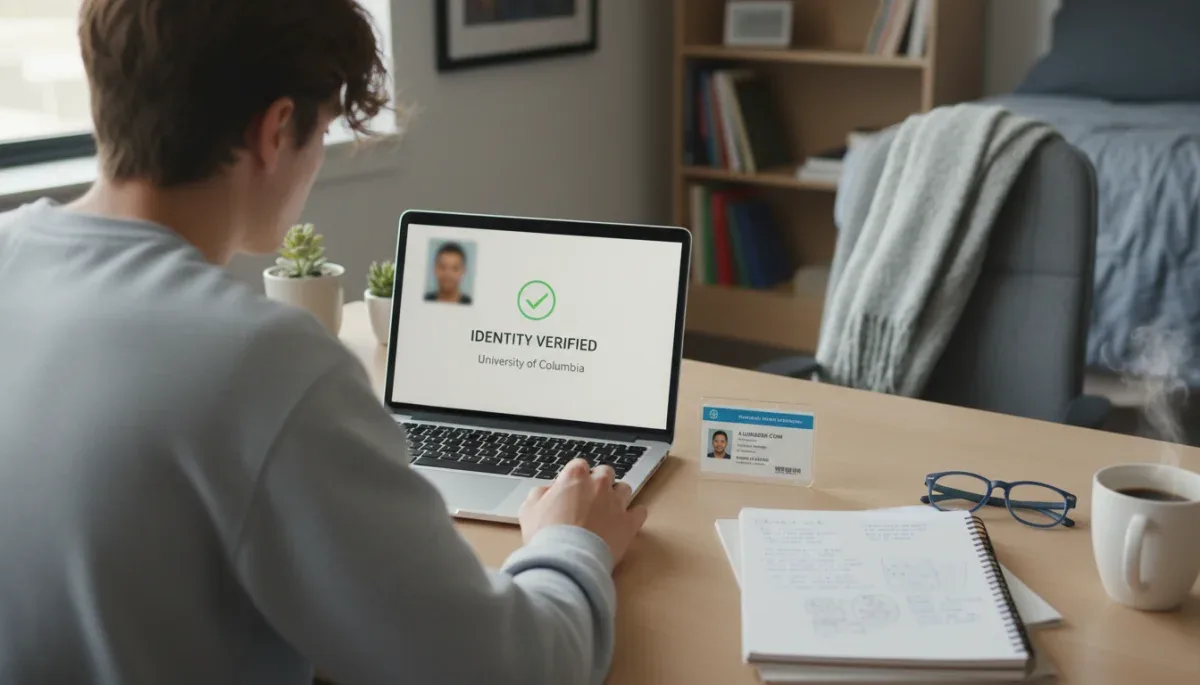
The fastest and most reliable verification method used by services like UNiDAYS relies on single sign-on authentication through your university's official portal. This method connects directly to your school's identity provider using open federated protocols such as Shibboleth or Security Assertion Markup Language.
When you select your college or university from the verification platform's drop-down directory, the system redirects your web browser to your institution's genuine login page. You submit your regular campus username and password directly to your school's secure server, meaning the commercial verification platform never observes, processes, or stores your primary campus login credentials. Once your school verifies your identity, it transmits an encrypted digital assertion confirming your current affiliation back to the platform.
Key steps during the single sign-on screening
- The user selects their accredited academic institution from an indexed global list.
- The browser redirects directly to the institution's official campus authentication screen.
- Multi-factor security prompts authenticate the identity directly against campus servers.
- The university identity directory returns a basic confirmation token of active status.
Because this transaction occurs entirely through established academic authentication frameworks, approval is generally instantaneous. If an account is suspended or the student has graduated, the campus server rejects the login or transmits an inactive status, prompting the verification service to decline access to gated store offers.
Direct email loop confirmations
When single sign-on integrations are unavailable or experience temporary technical outages, verification platforms rely on institutional email confirmations. This process requires you to enter an active email address issued directly by your college or university, typically ending in a regional academic domain such as .edu in the United States or equivalent designations abroad.
Once you submit your academic email address, the verification engine checks the domain against a proprietary registry of authorized educational institutions. If the domain matches an accredited entity, the service automatically sends a single-use verification link containing a cryptographic security token directly to that inbox. Clicking that link within a designated window—usually between fifteen minutes and twenty-four hours—confirms that you hold active access to an official student communications channel.
While effective for rapid authentication, email loops carry strict technical safeguards to prevent misuse. Verification providers routinely filter out generic consumer email domains, forward-only mailboxes, and disposable email generation tools. Furthermore, because some universities permit alumni to keep their institutional email addresses indefinitely, verification services often pair email verification with secondary database queries to confirm that the recipient is an actively enrolled scholar rather than a former graduate.
Manual document reviews and registrar records
Students attending smaller colleges, specialized vocational programs, or foreign institutions often find their school missing from automated single sign-on lists. In these scenarios, student discount verification platforms allow applicants to submit official documentation for manual or optical character recognition review.
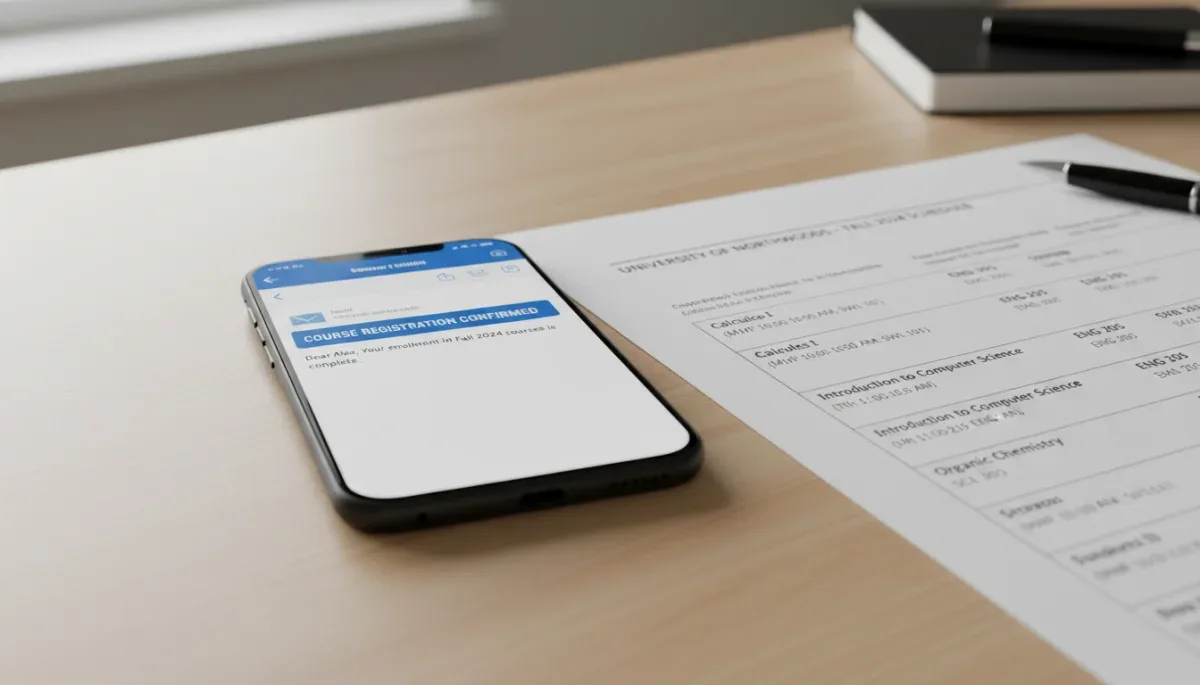
Manual review requires uploading clear digital scans or photographs of physical documents that establish active enrollment for the current academic term. Acceptable documentation typically includes an unexpired student identification card with a clearly printed expiration date, an official tuition billing statement, a current class schedule displaying credit hours, or a formal enrollment verification letter issued by the office of the university registrar.
Documents commonly accepted for secondary verification
- Dated student identification cards showing the current academic calendar year.
- Tuition billing invoices issued within the active term displaying the student's legal name.
- Registration receipts detailing enrolled course units and academic term dates.
- Official enrollment verification letters printed on university registrar letterhead.
Automated optical character recognition software scans these files to extract your full name, the institution name, and current calendar dates. If the digital parser detects ambiguity, human review teams inspect the records. Processing times for manual reviews vary from several minutes to two business days depending on seasonal application volume, such as back-to-school promotional windows in August and September.
Re-verification schedules and eligibility limits
Student eligibility is not a permanent status, so verification services implement scheduled renewal cycles to maintain accuracy. Most major verification platforms, including UNiDAYS, require users to re-verify their academic standing every twelve months to preserve access to promotional codes.
As the expiration date approaches, the platform prompts the user via email or in-app alerts to re-authenticate using their campus login, current email address, or updated course documentation. If an individual finishes their degree program or reduces their course load below an individual merchant's qualification threshold, access to the promotional perks ceases at the end of the active verification window. Retailers establish their own specific criteria: some grant perks to part-time students and faculty members, while others restrict eligibility strictly to full-time undergraduate and graduate students.
Attempting to circumvent these renewal rules by submitting forged documents or expired credentials violates the platform terms of service. Verification systems run automated anti-fraud scripts that analyze image metadata, document formatting, and digital artifacts. Submitting altered records can trigger a permanent ban across the verification provider's entire partner network, blocking access to hundreds of retail discounts simultaneously.
Data privacy standards and student record regulations
Submitting personal information to private commercial platforms naturally raises questions regarding educational data privacy. In the United States, higher education institutions must comply with the Family Educational Rights and Privacy Act, which restricts universities from disclosing educational records without explicit student consent.
Third-party verification platforms operate within these statutory frameworks by placing the initiative entirely on the student. When you request a verification check, you provide legal consent for the platform to verify specific directory details—typically your name, school affiliation, and active status—or you supply the documentation yourself. Legitimate verification providers do not obtain access to confidential academic histories, grade point averages, disciplinary files, or financial aid documentation.
Commercial verification networks maintain strict firewalls between educational records and advertising networks. While these companies track which retailer offers you redeem to distribute affiliate commissions, reputable services do not sell your underlying school credentials to external brokers. Reviewing the privacy policy on the provider's official website remains recommended to understand precisely how long your submitted documents are retained before being deleted from their screening servers.
At a glance
| Verification factor | What to know |
|---|---|
| Primary methods | Single sign-on portals, academic email links, and document uploads. |
| Renewal frequency | Most platforms require re-verification every twelve months. |
| Document requirements | Paperwork must show your full name, school, and current academic dates. |
| Privacy handling | Platforms confirm enrollment status without viewing grades or financial records. |
Frequently asked questions
Can high school students use UNiDAYS for discounts?
UNiDAYS restricts its membership to college, university, and post-secondary students who are at least sixteen years old. High school students seeking retailer discounts must typically use alternative services like SheerID or check whether individual retail brands offer direct youth programs outside the UNiDAYS ecosystem.
Why was my student document rejected by the verification system?
Document rejections usually happen when an upload lacks a clear academic date, cuts off your full name, or displays an expired term. Ensure your submission is an official registrar document or class schedule clearly showing your name, your institution, and the current calendar year.
What happens to my discount access after I graduate from college?
Your discount access continues until your active twelve-month verification window expires. Once that period ends, you must successfully re-verify active enrollment to generate new coupon codes, meaning graduated students permanently lose access to student-exclusive pricing across the network.
Does the verification service see my university account password?
No, verification platforms do not see or store your university portal password. When you log in through campus single sign-on, you submit your credentials directly to your institution's secure server, which returns an encrypted digital token confirming only that your account is active.
The bottom line
Student verification networks provide a secure, automated path for retail merchants to authenticate your academic standing without handling invasive personal records. Whether confirming your status through a quick single sign-on link, an official institutional email check, or an uploaded schedule, having unexpired proof of active enrollment guarantees uninterrupted access to savings. Before shopping, confirm your school credentials are active and check the official terms on the verification service's website.
Written by
Rita Lima
Rita Lima writes about clothes for flowershein.com. Each article explains how things work, compares published details such as prices, policies and program rules, and points readers to the official source before they decide.