
Active noise cancellation vs isolation in budget earbuds
Advertisement
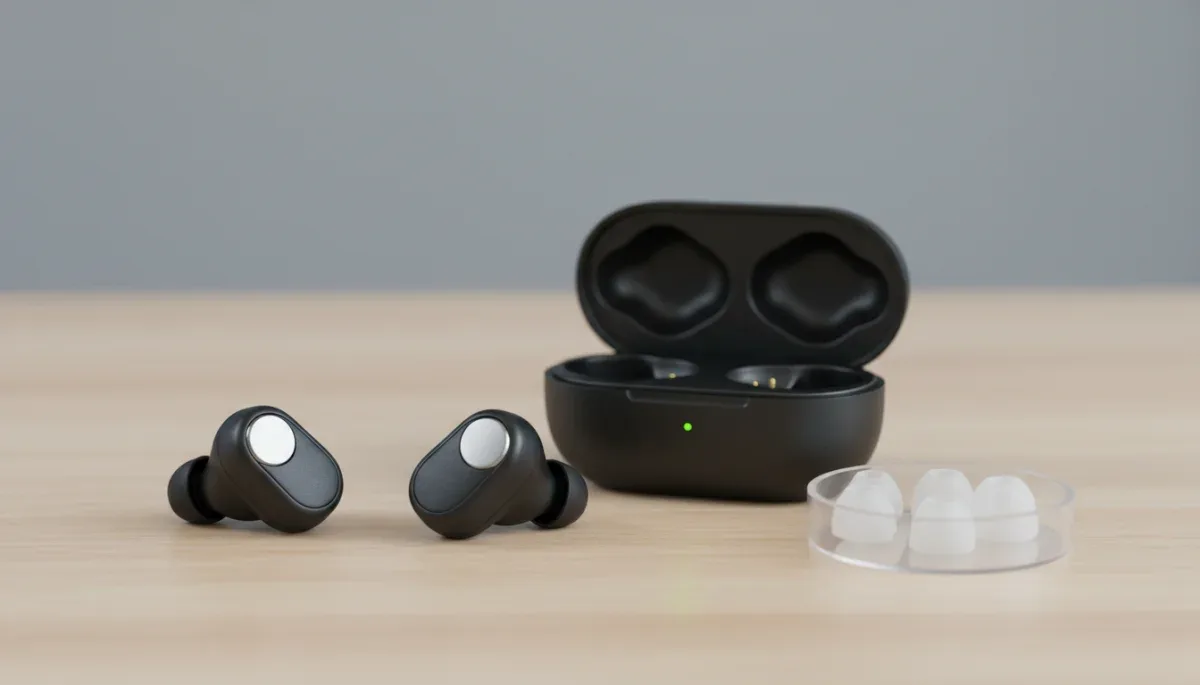
Passive noise isolation delivers more consistent sound clarity and significantly longer battery runtimes than active systems when shopping for budget noise cancelling earbuds under fifty dollars. This comparison helps shoppers who commute, work in shared rooms, or study in noisy environments decide where to spend their money without overpaying for substandard digital processing. The catch with low-cost active technology is that inexpensive microphones and cheap internal processors often add an audible background hiss, drain the battery rapidly, and struggle against irregular, high-pitched sounds.
Understanding the mechanical differences between physical seals and digital cancelation helps you evaluate product listings accurately. While marketing materials frequently blur the lines by describing simple silicone tips as physical noise canceling, true active noise cancellation requires dedicated microphones, processing silicon, and continuous battery output. Evaluating your typical listening surroundings, daily battery expectations, and fit requirements before purchasing prevents the frustration of buying an entry-level audio product that underperforms during daily use.
How passive noise isolation blocks sound
Passive noise isolation relies entirely on acoustic physics and physical barriers to prevent sound waves from reaching your eardrums. In-ear monitors and standard earbuds accomplish this by using silicone, rubber, or memory foam sleeves that compress upon insertion and expand to fill the contours of your ear canal. When an earbud creates an airtight mechanical barrier, sound waves must physically vibrate through the dense material of the housing and ear sleeve to reach your ear canal, which reduces their acoustic energy naturally across a broad range of frequencies.
Advertisement
Because passive isolation involves no electronic components or digital signal processing, it operates equally well whether your earbuds are powered on or switched off. This physical damping effect works particularly well against mid-range and high-frequency sound waves, such as office chatter, rustling papers, typing sounds, and sudden loud noises like clattering dishes or passing traffic. The acoustic attenuation provided by a properly seated silicone or foam ear tip can lower environmental noise significantly without introducing any distortion, signal delay, or background hiss to your music playback.
Achieving effective passive isolation requires zero power from the internal battery of your earbuds. This means your battery life remains steady and matches the full manufacturer rating regardless of how loud the outside room happens to be. For listeners who spend extended periods working or traveling without easy access to a wall outlet or charging case, relying on mechanical isolation ensures dependable listening performance throughout the day while avoiding the accelerated battery degradation that accompanies active signal processing.
How budget active noise cancellation works
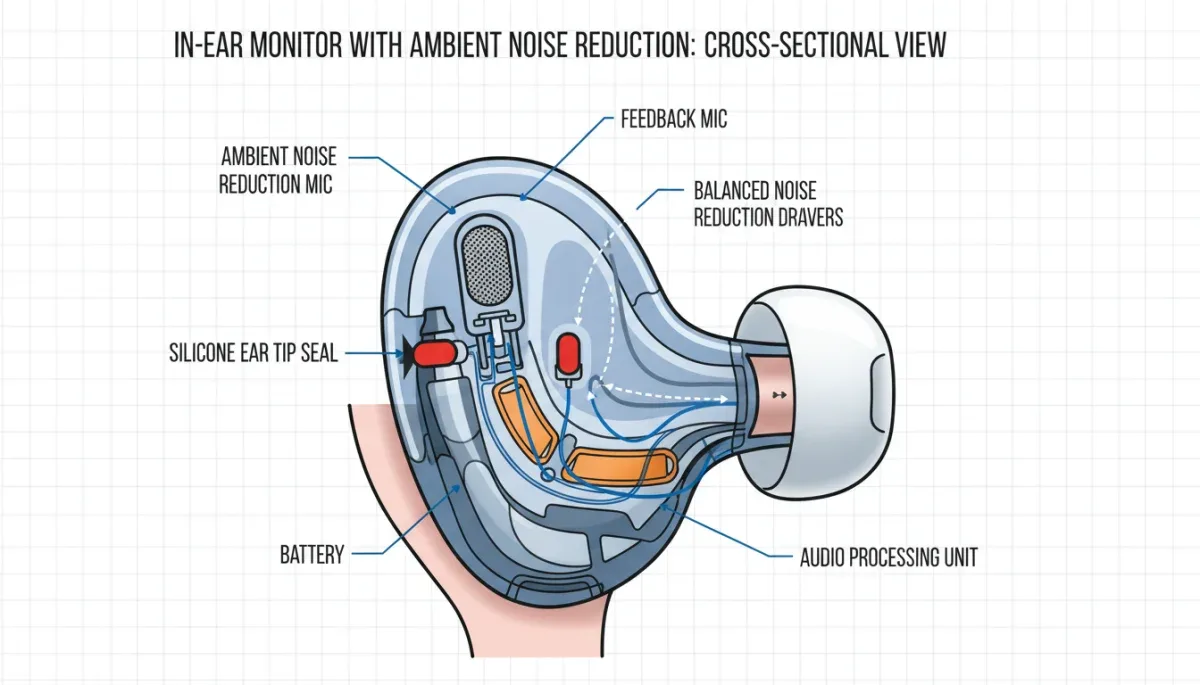
Active noise cancellation, commonly abbreviated as ANC, is an electronic process that counteracts ambient sounds using inverse sound waves. In low-cost audio hardware, external microphones positioned on the outer shell of the earbud capture low-frequency background rumbles, such as aircraft engines, bus hums, or home air conditioning fans. The internal processing chip rapidly analyzes this incoming analog sound signal, inverts its polarity by 180 degrees, and plays this inverted waveform through the earbud speaker driver at the exact moment the original noise enters your ear.
When the original sound wave meets the inverted wave, destructive interference occurs, causing the two opposing sound waves to cancel each other out before the acoustic wave reaches your eardrum. In premium headphones, this processing uses both external feedforward microphones and internal feedback microphones placed inside the acoustic nozzle. Budget noise cancelling earbuds, however, usually employ a simpler feedforward arrangement with a single external microphone per earbud to control parts costs and manufacturing complexity.
This entry-level hardware setup creates specific technical limits that affect real-world performance. Inexpensive processing chips often exhibit slight processing latency, which means sudden noises like barking dogs, horn honks, or shifting speech bypass the cancellation window before the chip can generate the inverse wave. As a result, budget active cancellation is primarily effective against steady, unchanging low-frequency drones, while remaining largely ineffective against mid-frequency conversation and erratic environmental noise.
Battery life tradeoffs and microphone hardware
Deploying digital cancellation circuitry inside tiny in-ear enclosures demands substantial electrical current from miniature rechargeable batteries. An earbud running an active cancellation algorithm must continuously power its microphone preamps, analog-to-digital converters, internal sound processor, and amplifier stages. In affordable true wireless models equipped with small 35 to 45 milliamp-hour cells, engaging active cancelation typically reduces total single-charge listening time by 25 to 40 percent compared to standard playback mode.
Microphone quality in the sub-fifty-dollar price tier introduces additional challenges during daily operation. Inexpensive micro-electro-mechanical microphones often struggle with self-noise, which manifests as a faint, continuous rushing sound or subtle white hiss during quiet acoustic passages, classical tracks, or audiobooks. This noise floor is generated by the electrical circuit itself as the low-cost processor amplifies weak incoming signals to calculate the cancellation curve.
Physical wind resistance presents another operational hurdle for budget active systems. Wind striking the exterior microphone ports can cause turbulence that the processor interprets as loud ambient noise, leading the speaker driver to pump sudden, uncomfortable popping or fluttering sounds into your ear canal. Higher-end models use recessed mic ports and dedicated digital wind filtering algorithms, whereas budget models rarely offer sufficient computational power to eliminate wind buffeting effectively.
Sound quality and frequency response impacts
The acoustic tuning of an earbud changes whenever active noise cancellation is engaged. Because the earbud speaker driver must reproduce your chosen media while simultaneously generating cancellation waveforms, the dynamic headroom of the small audio driver is reduced. In budget audio hardware using single dynamic drivers, this shared workload often leads to audible compression, making instruments sound crowded and reducing the overall soundstage width.
Low frequencies are particularly vulnerable to shift during this process. Inexpensive active systems routinely boost or cut mid-bass frequencies when the cancellation circuit is activated, resulting in a sound profile that may feel boomy and uncontrolled or, conversely, strangely hollowed out in the vocal ranges. When you switch between active cancellation and standard mode on entry-level models, you will frequently notice an unmistakable shift in audio equalization that forces you to adjust your playback volume.
Passive noise isolation avoids these acoustic changes by preserving the original tuning of the driver enclosure. When an earbud relies strictly on a mechanical seal, the driver can allocate its entire excursion capacity to reproducing your audio track accurately. Bass responses remain tighter and more punchy, treble frequencies avoid artificial digital artifacts, and the overall listening experience remains identical regardless of ambient noise changes in your immediate environment.
Fit, ear tips, and physical seal considerations
A secure acoustic seal is the single most critical factor for both passive isolation and active noise cancellation. If an earbud tip does not conform tightly to the walls of your ear canal, ambient sound will leak directly past the barrier into your ear, rendering passive isolation virtually non-existent. Without an airtight seal, sub-bass response drops off sharply because the ear canal fails to build the necessary acoustic pressure required to reproduce low frequencies.
Many shoppers assume that purchasing active cancelation eliminates the need for a precise physical fit, but the opposite is true. Active systems are calibrated under the engineering assumption that a standard mechanical seal is already in place. When ambient sound bypasses a loose ear tip, the inverse wave generated by the driver misses its acoustic target, often causing the cancellation process to fail completely or introduce unpleasant acoustic anomalies.
To maximize your acoustic seal when shopping on a budget, consider the following practical steps regarding earbud tips and fit:
- Always try every pair of included silicone ear tips, including asymmetrical combinations, as human ear canals frequently differ in diameter between the left and right sides.
- Consider purchasing aftermarket memory foam tips, which expand after insertion to create a custom contour seal that improves passive isolation by several decibels.
- Clean your ear tips regularly with warm water and mild soap, as accumulated natural oils degrade silicone grip and prevent the tip from holding an airtight seal.
- Test your seal by speaking aloud; your own voice should sound noticeably deeper and hollower inside your head when a proper mechanical seal is established.
Warranty coverage and return policies on entry audio
Online marketplaces and direct-import storefronts host hundreds of budget audio brands, making warranty clarity essential prior to completing a purchase. Many budget audio items feature limited manufacturer warranties that require the consumer to pay international shipping charges for replacements or repairs, which frequently exceed the original purchase price of the earbuds. Reading the specific seller warranty terms on the retail page prevents unexpected financial losses if an earbud speaker driver or charging pin fails.
Return policies for in-ear audio products also carry specific hygiene restrictions depending on the merchant. Certain online retailers classify in-ear headphones as personal hygiene items and may refuse returns once the product box has been unsealed, unless the device exhibits a verified manufacturing defect. Major domestic platforms generally allow standard 30-day return windows for opened consumer electronics, but individual third-party sellers operating within those platforms can enforce their own restocking fees or return exceptions.
Before purchasing an unfamiliar budget model, verify whether the retailer offers prepaid domestic return shipping in the event the earbuds do not fit comfortably in your ears. Because ear canal anatomy varies dramatically from person to person, an earbud model that receives favorable customer reviews may still cause ear fatigue or fail to create a secure seal in your own ears. Retaining the original retail packaging, charging cord, and spare tips during the initial weeks of ownership ensures you remain eligible for a refund under standard merchant terms.
At a glance
| Feature | What to know |
|---|---|
| Low-frequency noise | Budget active cancelation reduces steady motor and air hums better than silicone alone. |
| High-frequency noise | Passive isolation blocks speech, clatter, and sharp sounds more effectively without latency. |
| Battery consumption | Active circuitry drains miniature earbud batteries twenty-five to forty percent faster. |
| Hardware simplicity | Passive designs eliminate electrical background hiss and produce fewer software glitches over time. |
Frequently asked questions
Can passive noise isolation block speech better than budget active cancelation?
Yes, a snug silicone or foam seal generally blocks irregular mid-frequency sounds like human voices better than low-cost active cancellation. Budget processors lack the speed to counter dynamic speech patterns, whereas a dense mechanical seal naturally dampens incoming vocal acoustic energy across the entire mid-range band.
Do budget active noise cancelling earbuds hiss when audio is paused?
Yes, many entry-level models produce a faint, audible hiss or white noise when active mode is engaged during quiet tracks. This sound is hardware noise generated by inexpensive microphone preamplifiers and digital converters running at continuous gain to capture surrounding environmental sound.
Will upgrading my ear tips improve active noise cancellation performance?
Yes, swapping stock silicone tips for dense memory foam or multi-flange sleeves dramatically improves active performance. Active cancellation requires an airtight mechanical base to work correctly; closing air gaps prevents stray noise from bypassing the inverse sound wave created by the internal speaker driver.
Does passive noise isolation require any power from the charging case?
No, passive noise isolation functions entirely through mechanical acoustic resistance and uses no electrical battery power. Your earbuds will block external environmental sounds just as effectively when the battery is completely flat as they do when fully charged.
The bottom line
Budget active noise cancellation provides helpful relief against steady mechanical hums on public transport, but passive noise isolation remains the more dependable choice for sound fidelity, vocal blocking, and battery longevity under fifty dollars. An inexpensive pair of earbuds paired with high-grade, well-fitting ear tips consistently outperforms cheap digital cancellation processors burdened by microphone hiss and latency. Before completing your order, check the merchant return policy on open-box audio items to ensure you can return the earbuds if the physical fit does not seal comfortably in your ears.
Written by
Mariana Viana
Mariana Viana writes about clothes for flowershein.com. Each article explains how things work, compares published details such as prices, policies and program rules, and points readers to the official source before they decide.