
FTC Click to Cancel Rule and Online Subscriptions Explained
Advertisement
The Federal Trade Commission finalized the FTC click to cancel rule to require companies to make ending a recurring membership or auto-renewing service just as easy as enrolling in it. This regulatory change directly assists shoppers who find themselves trapped in recurring monthly fees for clothing clubs, beauty sample boxes, streaming platforms, and retailer discount memberships, though consumers must still monitor their billing statements to verify that merchant account cancellations process correctly.
For years, retail shoppers across the United States have faced confusing cancellation mazes, where signing up required a single tap on a checkout screen, but canceling required calling an offshore call center during limited business hours or navigating multi-page retention surveys. The updated regulation establishes concrete consumer protections across negative option programs, ensuring that the path out of a financial commitment matches the simplicity of the enrollment process.
What the click to cancel standard requires from businesses
Under the updated regulatory framework, the Federal Trade Commission addresses negative option marketing practices, which occur whenever a merchant interprets a customer silence or inaction as consent to charge their payment card. The core mandate of the FTC click to cancel rule is procedural parity: if a customer can sign up for a service online with a single digital transaction, the merchant must provide an equally direct online mechanism to stop recurring payments. Businesses cannot force an online customer to speak with a customer retention representative or submit a written cancellation request via postal mail.
Advertisement
In addition to equal cancellation access, the regulation sets rigorous requirements around merchant disclosures and consumer consent. Retailers and digital services must clearly disclose all material terms before obtaining a shopper billing information, including the exact billing amount, the frequency of recurring charges, and the specific deadline by which a member must cancel to prevent subsequent renewals. Furthermore, sellers must obtain unambiguous affirmative consent specifically for the recurring billing component, separating the auto-renewal acceptance from general terms of service checkboxes.
Core requirements mandated by federal regulators
- Cancellation mechanisms must be located in an easily accessible digital space and take no more steps to complete than the initial sign-up workflow.
- Sellers must clearly and conspicuously disclose the recurring billing cadence, price increases, and notice deadlines before collecting billing details.
- Merchants must maintain verifiable records proving that consumers affirmatively agreed to ongoing recurring automatic charges.
- The cancellation interface cannot subject consumers to deceptive misdirection, artificial countdown timers, or unskippable promotional retention offers without consent.
These provisions eliminate dark patterns, which are deceptive website design elements engineered to confuse, manipulate, or frustrate users into maintaining paid services they no longer use. At the time of writing, these requirements establish enforceable federal standards across digital storefronts, meaning businesses that fail to provide direct cancellation options risk enforcement actions and civil financial penalties from government regulators.
How recurring retail memberships and trial offers change

Budget-conscious consumers who shop for clothing, electronics, and home decor frequently encounter promotional offers that transition into recurring VIP memberships. Many discount apparel websites and lifestyle brands incentivize initial purchases by offering steep discounts on apparel or home items, provided the buyer joins a monthly recurring credit program. Under historic business practices, these trial periods quietly converted to automatic monthly billing, leaving buyers with store credits they never intended to purchase.
The FTC click to cancel rule significantly shifts how brands operate these membership programs. Retailers offering introductory trials or free shipping passes can no longer hide future recurring costs in fine print during the initial checkout process. If a site offers an introductory fashion membership for ninety-nine cents that converts to a monthly charge of thirty-nine dollars after seven days, the terms of that conversion must be displayed right next to the payment submission button, ensuring complete billing transparency.
Key protections for retail shopping clubs
- Introductory trials must provide the exact calendar date and time when the initial promotional window expires.
- Monthly store credit charges must feature a direct web-based cancellation link directly inside the member personal dashboard.
- Shoppers enrolled via mobile applications must be permitted to cancel directly through that same mobile application without external redirects.
- Retailers cannot require in-person visits to physical retail stores to terminate a subscription that was established online.
For independent shoppers searching for reliable values, these changes bring clarity to loyalty programs and fashion box subscriptions. If a consumer decides that a monthly curated wardrobe delivery or gadget warranty plan no longer fits their personal household budget, the customer can complete the cancellation process immediately through their account settings without navigating protracted cancellation scripts or waiting in chat queues.
Legal challenges and the implementation timeline
While federal regulators approved the final rule to curb persistent billing abuses, the implementation timeline has encountered formal resistance from corporate trade groups. Industry trade associations representing internet service providers, advertising organizations, and security services filed legal petitions in federal appeals courts shortly after the announcement. These legal challenges contend that the federal agency exceeded its statutory regulatory authority under Section 18 of the Federal Trade Commission Act and placed unnecessary operational burdens on legitimate commercial enterprises.
At the time of writing, federal courts are reviewing these petitions to determine whether specific provisions will proceed according to the original federal register schedule or face administrative delays. The original framework outlined an implementation schedule wherein basic deceptive disclosure prohibitions take effect sixty days following official publication, while complex technical mandates—such as engineering symmetrical cancellation flows—are allotted a longer compliance window of approximately one hundred and eighty days.
Consumers should understand that while legal battles between trade groups and federal agencies play out in appellate courts, state-level regulations also remain active. States such as California, New York, and Colorado have enacted robust automatic renewal statutes that independently mandate clear online cancellation links and proactive renewal reminder notices. Even as the federal standard navigates judicial reviews, reputable national merchants generally align their online account portals with the strictest regional standards to ensure continuous compliance across all fifty states.
How shoppers can spot deceptive subscription practices
Even with heightened federal oversight, deceptive billing practices can still appear on third-party shopping portals, pop-up stores, and unverified discount outlets. Consumers must remain vigilant when entering payment information on unfamiliar websites, particularly when purchasing deeply discounted electronics or viral clothing items advertised on social media networks. Rogue operators frequently disguise ongoing monthly charges as standard one-time transactions or mandatory delivery insurance fees.
One prevalent deceptive tactic involves bundled checkouts. In this scenario, an online store automatically pre-selects an opt-in checkbox that adds a recurring monthly VIP discount club fee to a standard order of apparel or household supplies. Because the checkbox is already marked, hurried consumers may finalize the checkout without realizing they accepted an ongoing financial contract. Federal regulations explicitly prohibit pre-checked boxes for negative option enrollment, making any merchant that uses them non-compliant with standard consumer protection guidance.
Red flags to watch for during digital checkout
- Pre-selected check boxes regarding memberships, digital VIP passes, or recurring monthly product replenishment.
- Websites that fail to display a clear customer service contact, physical mailing address, or operating phone number.
- Invoices that list vague charges such as membership support, service protection, or access fees alongside retail items.
- Account dashboards where the profile management section lacks an explicit billing or subscription management tab.
Recognizing these warning signs empowers shoppers to protect their bank accounts before an unauthorized charge occurs. If a retail site makes finding the terms of service difficult, or obscures whether an order is a one-time purchase versus an ongoing monthly subscription, consumers should pause the transaction and look for established retailers with transparent business practices.
Practical steps to cancel unwanted online memberships
Taking control of recurring digital subscriptions requires a systematic approach, especially during the phased rollout of federal regulatory changes. If you are currently paying for online streaming services, apparel discount memberships, home goods clubs, or software packages that you no longer utilize, you can leverage existing merchant tools and banking protections to permanently terminate those recurring obligations.
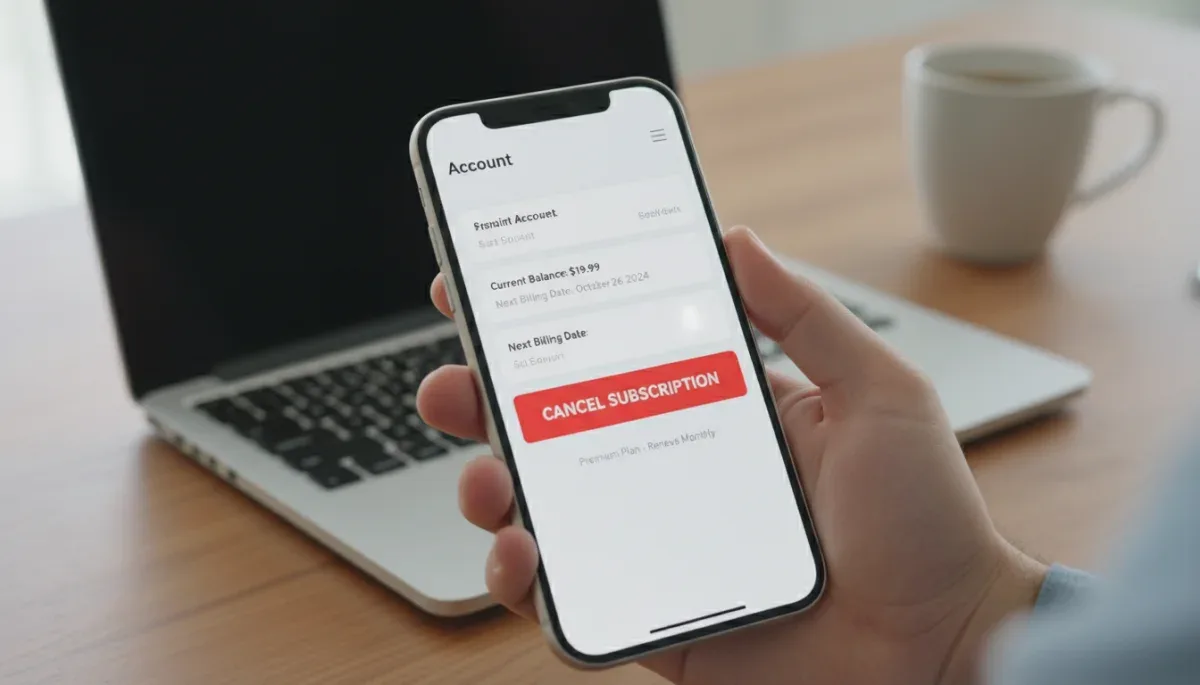
Begin by logging into the merchant service account via a web browser rather than relying exclusively on simplified mobile app interfaces, as desktop account portals often feature more comprehensive account settings. Navigate directly to the account settings, billing profile, or membership management screen. Search for an explicit button labeled cancel membership, end auto-renewal, or manage subscription. If the service complies with the FTC click to cancel rule, clicking this button should initiate a straightforward, final cancellation path without forcing you to complete external phone calls or automated email exchanges.
Step-by-step subscription removal checklist
- Log into your customer profile and locate the billing history tab to verify your renewal date and payment method.
- Select the cancellation link and complete all confirmation prompts until a cancellation confirmation number appears on screen.
- Take a direct screenshot of the final cancellation screen displaying the date, time, and confirmation details for your personal records.
- Check your associated email inbox to ensure the company delivered an official written cancellation receipt.
- Monitor your bank or credit card statements during the subsequent billing cycle to verify that no residual charges process.
If a merchant intentionally hides the cancellation path, refuses to process your request, or continues billing your card after you followed the published termination steps, you have clear recourse. Contact your credit card issuer to dispute the unauthorized recurring transactions, providing your cancellation confirmation screenshot as evidence. You can also file an official consumer complaint with your state attorney general and submit an online fraud report directly through the official Federal Trade Commission reporting portal.
At a glance
| Rule factor | What to know |
|---|---|
| Click to cancel parity | Canceling an online subscription must require no more steps or effort than enrolling. |
| Upfront disclosures | Sellers must clearly state all renewal dates, fees, and deadlines before checkout. |
| Affirmative consent | Pre-checked boxes for recurring charges and hidden renewal terms are strictly prohibited. |
| Legal status | The regulation faces industry lawsuits, though many merchants and states already enforce rules. |
Frequently asked questions
Can a company force me to call them to cancel an online service?
No, under the federal standard, a business cannot require a phone call to cancel a subscription if you signed up online. The cancellation mechanism must be provided through the same digital channel used to enroll, allowing you to complete the process entirely through the website or mobile application.
Does the regulation eliminate subscription save offers entirely?
No, merchants may still offer discounts or plan modifications to persuade you to stay, but they cannot use endless retention loops that trap you. If you decline an offer, the company must proceed immediately with your cancellation without forcing you through unskippable promotional surveys.
What should I do if a merchant continues charging my card after cancellation?
Contact your credit card issuer immediately to dispute the charge using your cancellation confirmation receipt as documentation. You should also file an official report with the Federal Trade Commission and your state attorney general office to report the merchant for non-compliant billing practices.
Does this rule cover gym memberships and local services?
The rule applies to recurring subscriptions across all industries, but the cancellation parity matches the sign-up method. If you signed up for a local gym in person with a paper contract, the business may still require an in-person or written cancellation under existing contract terms.
The bottom line
The click to cancel framework empowers consumers by ensuring that ending an online subscription is just as quick and simple as starting one. While federal enforcement navigates ongoing legal challenges in appellate court, major brands are updating their account dashboards to offer transparent billing terms and direct cancellation links. Before entering your payment card details for any trial offer or discounted shopping membership, confirm the exact cancellation steps and renewal dates in the merchant account settings.
Written by
Lucas Bastos
Lucas Bastos writes about clothes and house for flowershein.com. Each article explains how things work, compares published details such as prices, policies and program rules, and points readers to the official source before they decide.