
How to prevent cotton sweaters from shrinking in the wash
Advertisement
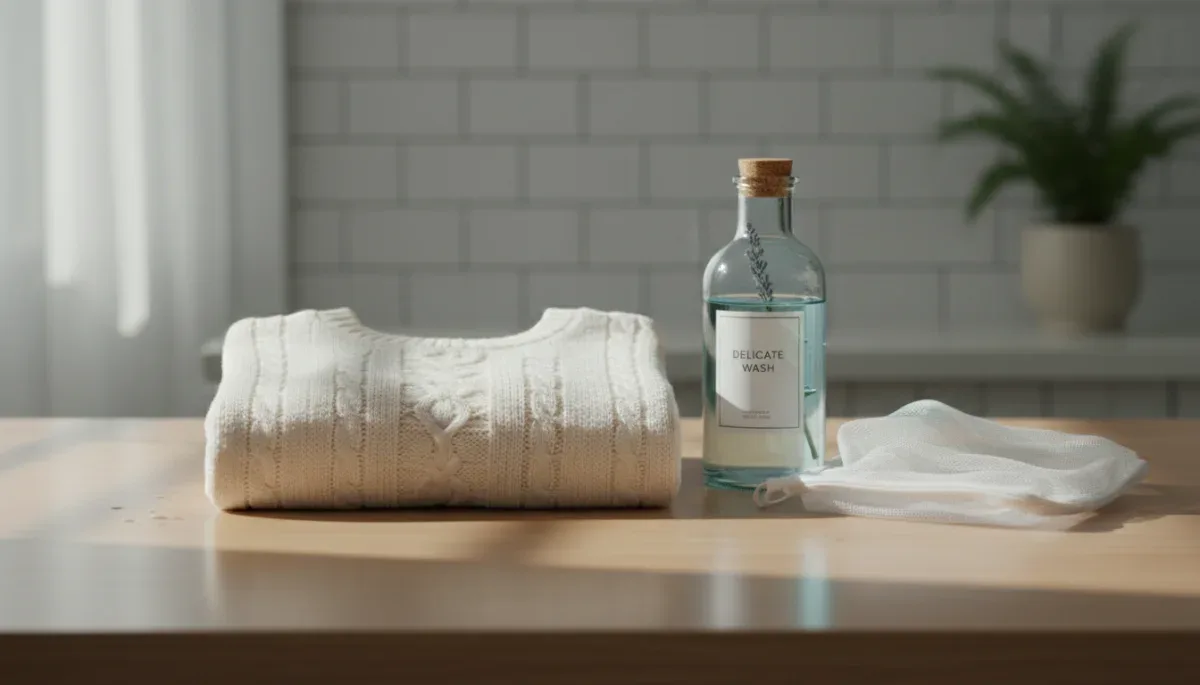
You can prevent cotton sweaters shrinking in the wash by laundering them exclusively in cold water, selecting a gentle cycle with minimal agitation, and air-drying them flat on a clean surface. Taking these precautions protects the natural cellulose fibers from snapping back into their compacted state, which is the primary cause of lost garment dimensions.
This routine works for lightweight cardigans, chunky cable knits, and everyday cotton pullovers purchased from discount retailers and mid-tier apparel stores alike. The catch is that air-drying knits flat requires patience, horizontal counter or drying rack space, and extra handling time compared to throwing laundry directly into a heated tumble dryer.
Why cotton fibers shrink during laundering
Cotton is a natural plant fiber composed of cellulose chains that textile manufacturers stretch, spin into yarn, and weave or knit into garments under significant mechanical tension. During the production process, knitting machines pull these fibers taut to create uniform stitches across the body and sleeves of a sweater. This mechanical tension locks the threads into an elongated, artificial shape that remains stable only as long as the garment stays dry and free from intense thermal disruption.
Advertisement
When a cotton sweater enters a washing machine, water breaks the temporary hydrogen bonds holding the stretched fibers in place. If that water is hot, or if the dryer subjects the damp yarn to forced heat, the relaxed fibers recoil and release the manufacturing tension. Textile scientists call this phenomenon relaxation shrinkage, which represents the single largest loss of size a cotton garment experiences during its usable life.
Key factors that trigger shrinkage
- Thermal exposure: High water temperatures and heated dryer air weaken moisture bonds and cause fiber coils to constrict rapidly.
- Mechanical agitation: Vigorous spinning, rubbing, and churning force adjacent knit loops to tangle and lock tightly together.
- Moisture evaporation rate: Rapid moisture extraction in a high-heat drum pulls yarn ends closer together than slow, ambient evaporation.
- Knit density: Loosely knit open weaves tend to shift and contract more unpredictably than tightly wound interlock cotton knits.
A secondary issue known as felting or consolidation shrinkage occurs when individual cotton threads rub against one another during aggressive wash cycles. The rough microscopic scales of natural fibers catch and mat together, permanently tightening the gaps between knit loops. Once cotton threads consolidate under friction, restoring the garment to its original chest width and sleeve length becomes far more difficult.
Water temperature and wash cycle selection
Water temperature dictates how much elasticity and give remain in natural cotton yarn throughout the cleaning process. Heated water softens the internal structure of cotton, making individual loops pliable and prone to snapback contraction. Setting your washing machine to a dedicated cold wash, typically between sixty and eighty degrees Fahrenheit, cleans everyday soil while leaving fiber tension intact.
Modern laundry detergents utilize enzymes engineered to break down body oils, surface dirt, and food residues at cold temperatures without needing thermal assistance. Using hot or warm water to clean a standard cotton sweater provides negligible hygiene benefits for routine wear, yet it introduces an immediate risk of permanent dimensional loss. Cold water preserves fiber dimensions and also reduces color fading in dyed cotton garments.
Recommended machine wash protocol
- Water temperature setting: Select tap cold or thirty degrees Celsius to minimize thermal shock on the yarn.
- Cycle type: Choose delicate, gentle, or hand wash mode to limit drum rotations and reduce mechanical friction.
- Spin speed: Set the final spin extraction to low or medium to prevent the drum walls from crushing wet loops.
- Load balancing: Wash knitwear alongside similar lightweight fabrics rather than heavy denim, zippered jackets, or coarse canvas.
The speed of drum agitation matters just as much as temperature when you want to prevent cotton sweaters shrinking over repeated washings. Normal and heavy-duty wash cycles subject fabrics to rapid directional changes that twist and compress damp knit loops. Selecting a gentle or delicate cycle keeps drum movement slow and intermittent, which reduces the friction that leads to fiber tightening.
Washing methods by hand versus machine
Hand washing remains the safest approach for cleaning delicate or loosely knit cotton pullovers because you maintain complete control over water temperature and physical handling. To hand wash effectively, fill a clean washbasin or sink with cool water and mix in a small dose of mild liquid detergent before adding the garment. Submerge the sweater fully and press it gently into the water without twisting, pulling, or scrubbing the seams.
Allow the sweater to soak for ten to fifteen minutes, then drain the soapy water and refill the basin with fresh cold water to rinse. Press the garment against the sides of the basin to release remaining detergent suds rather than wringing the fabric like a washcloth. Wringing wet cotton twists the fragile knit stitches out of alignment and creates uneven tension across the collar, hem, and cuffs.
Machine washing safeguards for knits
- Turn the sweater inside out: Protecting the outer face of the knit minimizes surface pilling and keeps friction on the interior seams.
- Fasten all closures: Zip metal zippers and fasten buttons on cardigans so hardware cannot snag and pull neighboring yarn.
- Use a mesh wash bag: Enclosing the sweater inside a zippered mesh laundry pouch shields it from rubbing directly against the drum or other garments.
- Measure liquid detergent carefully: Excess detergent residue stiffens natural cotton fibers and makes them brittle, increasing the likelihood of post-wash tightening.
If you prefer using a washing machine for convenience, a mesh laundry bag is mandatory equipment for knitwear preservation. The mesh barrier allows water and suds to circulate freely while stopping the sweater sleeves from wrapping around the central agitator or twisting around heavier garments. This simple barrier neutralizes most of the stretching and subsequent snapback shrinking caused by modern top-loading and front-loading appliances.
Safe drying techniques without heat exposure
Tumble dryers cause more garment shrinkage than washing machines because they combine intense dry heat with continuous mechanical tumbling. When damp cotton fibers spin against a heated metal drum, moisture evaporates rapidly while friction pulls the yarn loops into a tight, compacted matrix. Even low-heat or permanent-press dryer cycles produce enough warmth to trigger noticeable shrinkage on pure cotton knitwear.
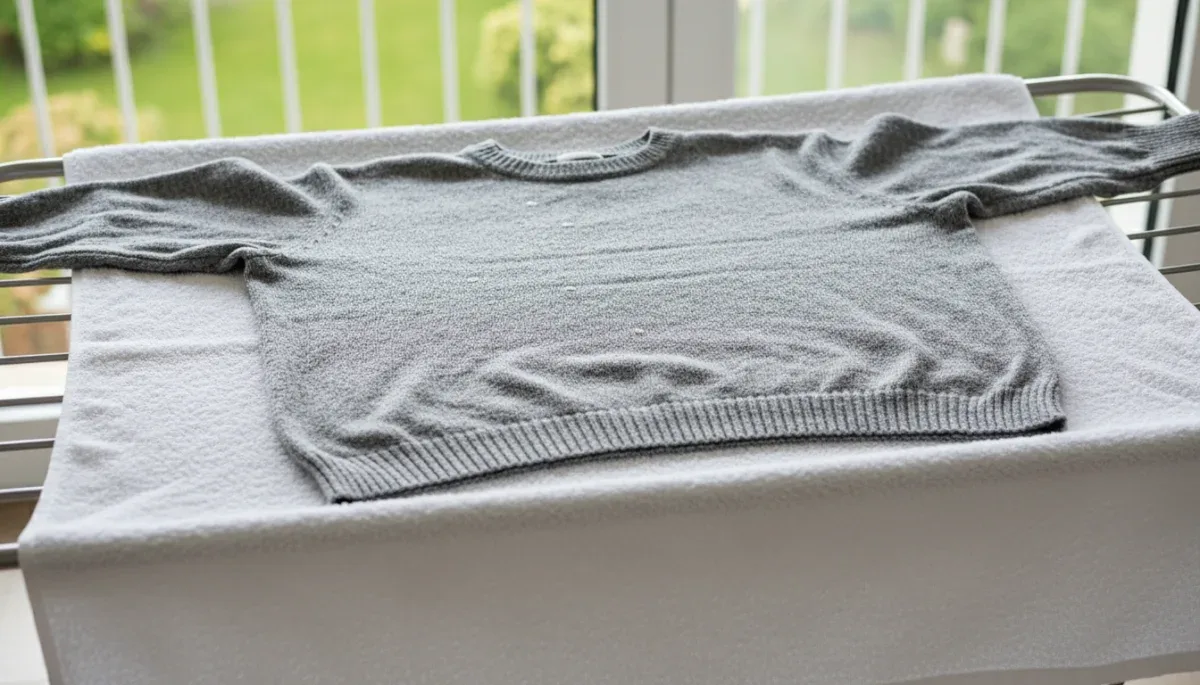
To dry a cotton sweater safely, lift the garment out of the washing machine or basin while supporting its entire weight so gravity does not pull the wet yarn out of shape. Lay a clean, dry white bath towel flat on a hard counter or table and place the damp sweater on top. Roll the towel up with the sweater inside, forming a cylinder, and press down firmly along the roll with your hands or knees to absorb excess water without twisting.
Drying steps for dimensional stability
- Unroll and transfer: Remove the sweater from the damp towel and place it on a fresh, dry towel or a flat mesh drying rack.
- Reshape manually: Gently smooth out wrinkles and nudge the side seams, armholes, and sleeves into their original proportional measurements.
- Align collar and cuffs: Square the neckline and ease ribbing into position so edges do not curl inward as the yarn dries.
- Avoid direct heat sources: Position the drying rack in an area with good room airflow, away from direct sunlight, floor vents, or space heaters.
Never hang a wet or damp cotton sweater on a clothes hanger to dry. Water adds significant weight to cotton yarn, and hanging the garment pulls that weight downward, stretching the shoulders and torso vertically while causing the horizontal knit to snap inward and narrow the chest. Drying flat distributes the moisture load evenly, allowing the fibers to stabilize at their intended measurements.
Reading laundry care labels on knitwear
Federal trade regulations in the United States require apparel manufacturers to attach a permanent care label specifying fiber content and at least one safe cleaning method. Checking this tag before washing provides essential clues about how the fabric will react to moisture and mechanical agitation. A label stating one hundred percent cotton requires far gentler handling than a blended garment that incorporates polyester, nylon, or acrylic fibers.
Manufacturers frequently use standardized laundry care symbols developed by ASTM International alongside written instructions. A wash basin symbol with a single dot indicates a maximum water temperature of thirty degrees Celsius, or eighty-five degrees Fahrenheit, which matches standard cold-water settings. A basin underlined by one horizontal bar calls for a permanent-press cycle, while two horizontal bars designate a gentle or delicate cycle with reduced agitation.
Common knitwear care symbols explained
- Square with an internal circle crossed out: Do not tumble dry under any circumstances; the garment requires air drying.
- Square with a horizontal line: Dry flat; do not hang or line-dry the wet garment.
- Basin with a submerged hand: Hand wash only; mechanical washing machines may damage seams or alter garment dimensions.
- Iron with one dot: Low heat iron only, with a maximum soleplate temperature of one hundred ten degrees Celsius.
Some cotton garments feature a label stating pre-shrunk or garment-washed, indicating the fabric underwent an industrial pre-washing treatment before cutting and sewing. While pre-shrunk cotton exhibits greater dimensional stability than untreated cotton, it is not impervious to heat and rough washing. Pre-shrunk cotton sweaters will still shrink if subjected to repeated hot-water cycles or commercial dryer heat.
How to gently reshape a tightened sweater
If an accidental encounter with warm water or light dryer heat causes a cotton sweater to fit tighter than usual, you can often relax the contracted fibers through a controlled moisture block. This technique does not repair broken or felted yarn, but it eases tightened hydrogen bonds back into an expanded alignment. The process relies on lukewarm water, a mild conditioning agent like hair conditioner or baby shampoo, and gentle manual manipulation.
Begin by filling a washbasin with lukewarm water and stirring in one to two tablespoons of gentle hair conditioner until completely dissolved. Submerge the tightened sweater and let it soak for twenty to thirty minutes so the conditioning formula penetrates deep into the core of the cotton yarn. The conditioner softens the stiffened cellulose coils, temporarily restoring flexibility to the knit structure.
Blocking and stretching step by step
- Press out water: Drain the basin and press the sweater flat against the basin wall to extract liquid without rinsing away all conditioner.
- Towel roll absorption: Roll the damp sweater inside a dry towel to remove remaining excess water until the garment is damp rather than soaking wet.
- Pin or weigh down: Place the sweater flat on a blocking mat or clean towel, matching its dimensions against a well-fitting sweater or measuring tape.
- Gradual manual tension: Work outward from the center, gently easing the chest, hem, and sleeves into their original length and width in small increments.
Allow the reshaped sweater to air dry completely while resting flat in its pinned or stretched position. Do not overstretch the damp fabric aggressively, as pulling too hard can break interior seam threads or distort the symmetry of the neckline. Once dry, the cotton fibers reset into their newly expanded positions, restoring wearable comfort without damaging the garment structure.
At a glance
| Care factor | What to know |
|---|---|
| Water temperature | Cold water preserves fiber length and prevents cellulose coils from contracting. |
| Agitation level | Delicate cycles and mesh laundry bags protect knit loops from surface friction. |
| Drying method | Air-drying flat on a towel or rack prevents heat shrinkage and gravity distortion. |
| Reshaping aid | A lukewarm soak with hair conditioner relaxes tightened knitwear for manual stretching. |
Frequently asked questions
Does pure cotton shrink every time you wash it?
No, cotton sweaters do not shrink indefinitely with every laundering. Most dimensional shrinkage happens during the first few wash and dry cycles when residual factory manufacturing tension releases. Consistent cold-water washing and flat air-drying prevent further fiber tightening over the life of the garment.
Can you use a dryer on the air fluff setting?
Yes, an air-fluff or no-heat cycle is generally safe because it circulates ambient air without heating elements. However, prolonged tumbling still creates mechanical friction between knit loops, which can lead to light pilling. Flat drying on a rack remains the safest option for heavy knits.
Will fabric softener prevent cotton knitwear from shrinking?
No, liquid fabric softeners coat fiber surfaces with chemical lubricants but do not prevent thermal contraction. In fact, heavy softener buildup can reduce the natural absorbency of cotton and leave knitwear feeling greasy over time. Using mild liquid detergent and cold water provides far better size protection.
Why did my cotton sweater shrink even though I washed in cold water?
Cold water alone cannot prevent shrinkage if the garment is transferred to a warm dryer afterward. Additionally, high-speed spin cycles in some washing machines compress wet cotton stitches against drum perforations with enough mechanical force to cause tightening before drying even begins.
The bottom line
Preventing cotton sweaters from shrinking requires eliminating the two elements that collapse knit fibers: high temperatures and aggressive machine friction. Washing in cold water on a delicate cycle inside a mesh bag and letting the garment dry flat ensures your knitwear retains its intended cut, drape, and proportions through many seasons of wear. Before loading your laundry, always check the care tag for specific blend ratios and manufacturer drying instructions.
Written by
Lucas Bastos
Lucas Bastos writes about clothes and house for flowershein.com. Each article explains how things work, compares published details such as prices, policies and program rules, and points readers to the official source before they decide.