
Peel-and-stick versus traditional wallpaper in rentals
Advertisement
Peel-and-stick wallpaper is generally the better option for temporary leases because its pressure-sensitive adhesive allows clean removal from sound drywall without water or harsh chemicals. Traditional wallpaper provides thicker coverage, richer tactile finishes, and superior seam invisibility, but its water-activated paste or separate adhesive binds deeply to wall surfaces and risks structural paint damage when pulled down.
This comparison helps tenants evaluate their decorative options against standard lease clauses that require apartments to be returned in their original condition. While self-adhesive rolls offer a fast route to customized rooms, their success depends heavily on existing paint finishes, wall textures, ambient indoor moisture levels, and careful surface preparation.
Adhesive chemistry and wall surface interaction
The primary technical distinction between these wall coverings lies in how they bond to residential drywall. Removable self-adhesive wallpaper relies on an acrylic, low-tack adhesive backing. This compound forms a mechanical bond with the outermost layer of paint rather than saturating the underlying gypsum substrate. When pressure is applied across the vinyl or woven polyester face, the adhesive grips the paint film firmly enough to suspend the weight of the sheet without creating a chemical weld.
Advertisement
Traditional wall coverings use water-soluble adhesives derived from modified starches, methylcellulose, or synthetic polymer resins. Whether prepasted or hung with unpasted rolls coated using a roller, these adhesives soften and permeate the wall surface. As the water evaporates, the paste cures into a firm crystalline lattice that anchors into microscopic pores in the paint and drywall paper. Stripping this network down the road requires rehydrating the paste using hot water, steam machines, or chemical enzyme strippers.
In a rental unit, that rehydration process presents substantial physical hazards. If moisture penetrates past the initial paint coat into the drywall face paper, the drywall can soften, bubble, or tear. Repairing gouged drywall requires skim-coating with joint compound, sanding, priming, and repainting the entire room, which landlords routinely deduct from initial security deposits.
Surface preparation and paint compatibility
Neither material performs well without correct surface preparation, but their requirements diverge when dealing with rental-grade finishes. Standard residential rental units are frequently repainted between tenants using builder-grade flat or matte latex paints. Flat paint surfaces feature an open, porous structure that readily sheds microscopic chalking particles, which can foul the tacky backing of removable panels and lead to premature peeling at the seams.
Conversely, semi-gloss, satin, and eggshell finishes create a sealed, slick surface that offers ideal grip for self-adhesive backings. Many contemporary architectural paints contain low or zero volatile organic compounds, using fluorosurfactant or silicone additives to repel dirt, scuffs, and household stains. These stain-resistant additives prevent pressure-sensitive adhesives from forming a continuous bond, frequently causing panels to drop from the wall within days of installation.
Critical wall inspection checks
- Test the paint sheen by shining a flashlight parallel to the wall to determine if the finish is flat, eggshell, or gloss.
- Wipe the drywall with a damp dark microfiber towel to see if powdery chalk transfers from the paint layer.
- Clean the entire surface with an isopropyl alcohol and water mixture to strip household grease and airborne residue.
- Allow patched and freshly painted rental walls to cure for at least four weeks before applying self-adhesive sheets.
Traditional pasted wall coverings handle flat and uneven surfaces more reliably. Because paste is applied wet, it fills minor wall indentations and micro-abrasions, equalizing minor differences in porosity. However, applying paste over poorly primed or unsealed rental paint increases the likelihood that the paste will pull the topcoat cleanly off the wallboard during future removal.
Installation workflows and pattern alignment
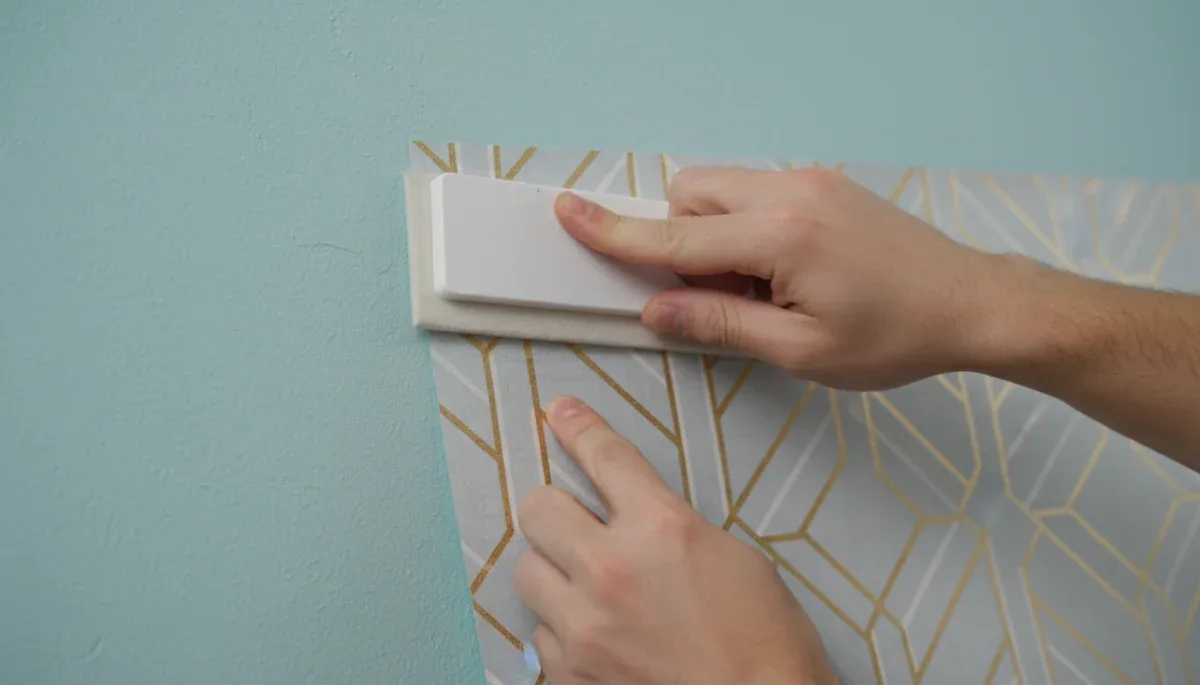
Installing wall coverings requires patience, methodical measuring, and specialized hand tools. Self-adhesive panels function essentially as oversized stickers. You must peel back a small section of the silicone-coated backing paper, align the top edge against a plumb line drawn on the wall, and press downward while smoothing outwards from the center. Adjusting misaligned sheets requires lifting the entire strip off the wall, which risks stretching flexible vinyl backing and distorting the pattern match further down the drop.
Traditional wallpaper offers an advantage known in the trade as slip. When wet paste is spread along the back of a paper strip, the sheet does not grab immediately upon contact. Installers can rest the material against the wall and gently slide it fractions of an inch in any direction using their palms to butt adjoining patterns together seamlessly. This adjustability makes traditional wallpaper easier to manipulate around door frames, plumbing pipes, electrical outlets, and uneven corners.
Essential tools for hanging panels
- A four-foot level or chalk plumb line to ensure the initial panel hangs perfectly vertical.
- A flexible plastic smoothing squeegee with a felt buffer edge to expel trapped air pockets without scratching printed ink.
- A heavy-duty craft knife fitted with fresh breakaway snap-off blades for crisp corner trimming.
- A metal straightedge ruler to guide horizontal trims along baseboard margins and ceiling moldings.
- A microfiber seam roller to compress overlapping joints without crushing embossed surface textures.
Handling traditional options also requires staging space for paste tables, soaking troughs, and clean drop cloths to catch liquid runoff. Peel-and-stick products require minimal workspace, generating dry paper waste that can be folded directly into standard recycling or waste bins as panels go up.
Performance in variable humidity and high-traffic zones
Environmental conditions inside an apartment determine how long any wall covering remains intact. Kitchens, half-baths, and laundry rooms experience rapid fluctuations in relative humidity and ambient temperature. Moisture introduces unique stress points to both hanging systems.
Removable panels made of pure calendered vinyl respond directly to indoor climate shifts. When room temperatures drop, vinyl contracts slightly, exposing subtle seams between panels. When heat and moisture rise, the vinyl expands, potentially causing ridges along abutting seams. If persistent steam from showers or stovetops penetrates behind the edges, it breaks down the temporary acrylic adhesive, curling outer corners downward.
Traditional woven and non-woven papers allow natural breathability. Water vapor passes through the fibrous backing without immediately pooling behind the sheet. When hung with heavy-duty fungicide-treated vinyl adhesives, traditional wallpaper maintains a durable surface capable of withstanding bumps from furniture, vacuum cleaners, and pets. For renters, however, hanging permanent papers in damp spaces presents a heightened liability: mold growth beneath damp, paste-saturated wallpaper requires deep remediation that exceeds minor paint touch-ups.
Removal steps and rental deposit protection
Preserving your security deposit requires leaving the apartment walls smooth, clean, and painted in the designated lease color. The removal phase demonstrates the distinct strengths and weaknesses of each product category.
Stripping peel-and-stick rolls requires no specialized hardware or rented equipment. Starting at an upper corner, grasp the material and slowly pull it downward at a continuous forty-five-degree angle toward the floor. Avoid yanking the panel straight outward toward yourself, as perpendicular pulling concentrates force on the paint film and can rip loose layers of drywall paper. If the adhesive grips too tightly, warming the vinyl face with a standard household hair dryer set to medium heat softens the adhesive and facilitates a clean release.
Removing pasted wallpaper is fundamentally more labor-intensive and messy. The outer decorative shell must often be scored using a wheeled perforation tool, followed by generous soaking with warm water and enzymatic paste dissolvers. The liquefied glue must then be scraped off using dull putty knives, producing wet residue that can stain carpeting, ruin baseboards, and strip protective floor varnishes if drop cloths shift during work.
Material costs and square footage budgeting
Cost calculations for rental wall decor extend beyond the initial sticker price of the rolls. Self-adhesive rolls generally carry a higher price per square foot than builder-grade traditional paper. A standard double roll of traditional wallpaper usually covers roughly fifty-six to sixty square feet, whereas peel-and-stick coverings are often sold in smaller single rolls covering twenty-eight to thirty-four square feet.
However, traditional paper incurs supplementary costs for hanging paste, mixing buckets, application brushes, seam rollers, and removal chemicals. For renters who intend to live in an apartment for only one or two years, the total cost of installing traditional wallpaper includes the time, labor, and patching supplies required to restore the room prior to inspection.
Peel-and-stick paper eliminates accessory costs. Its higher upfront expense acts as an insurance policy against labor-intensive move-out restoration. When calculating how many rolls to purchase, always add fifteen to twenty percent extra to account for pattern repeat drop matches, trimming margins, and accidental miscuts around windows.
At a glance
| Factor | What to know |
|---|---|
| Adhesive bond | Peel-and-stick uses dry acrylic glue, while traditional relies on water-soluble paste. |
| Drywall safety | Removable panels peel off cleanly without soaking or scoring the drywall face. |
| Pattern slip | Traditional paste permits sliding adjustments on the wall, while self-adhesive grabs instantly. |
| Moisture tolerance | High humidity can cause peel-and-stick corners to lift and curl over time. |
Frequently asked questions
Does peel-and-stick wallpaper damage rental walls?
Peel-and-stick wallpaper rarely damages rental walls if the existing paint was applied over proper primer and has fully cured. However, pulling panels away too quickly or applying them over flaking, unprimed, or builder-grade matte paint can cause paint flecks and paper layers to tear away with the adhesive.
Can I put traditional wallpaper in a rental apartment?
You can put traditional wallpaper in a rental only with written permission from your landlord or property management company. Traditional paste forms a lasting bond that requires wetting, scraping, and repainting to remove, which violates most standard lease clauses regarding temporary interior modifications.
Why does my peel-and-stick wallpaper keep falling down?
Peel-and-stick wallpaper usually falls down because the underlying paint contains stain-blocking additives, or the wall surface has a textured finish that limits contact area. Uncleaned dust, ambient grease, low room temperatures, and inadequate installation pressure with a smoothing squeegee also undermine the adhesive bond.
How long should new paint cure before applying wallpaper?
New paint must cure for at least three to four weeks before you apply peel-and-stick wallpaper. While latex and acrylic paints feel dry to the touch within hours, they continue to off-gas solvents and harden for weeks, which can degrade temporary adhesives if covered prematurely.
The bottom line
Peel-and-stick wallpaper remains the recommended choice for apartments because it combines visual customization with reliable, chemical-free removal that protects your deposit. Traditional paper delivers unmatched tactile quality and easier seam adjustment, but the labor required to strip paste from delicate drywall creates unnecessary lease liabilities. Before purchasing any rolls, review your lease agreement for wall decor restrictions and conduct a small adhesive test sample on an inconspicuous section of wall.
Written by
Rita Lima
Rita Lima writes about clothes for flowershein.com. Each article explains how things work, compares published details such as prices, policies and program rules, and points readers to the official source before they decide.